Introduction
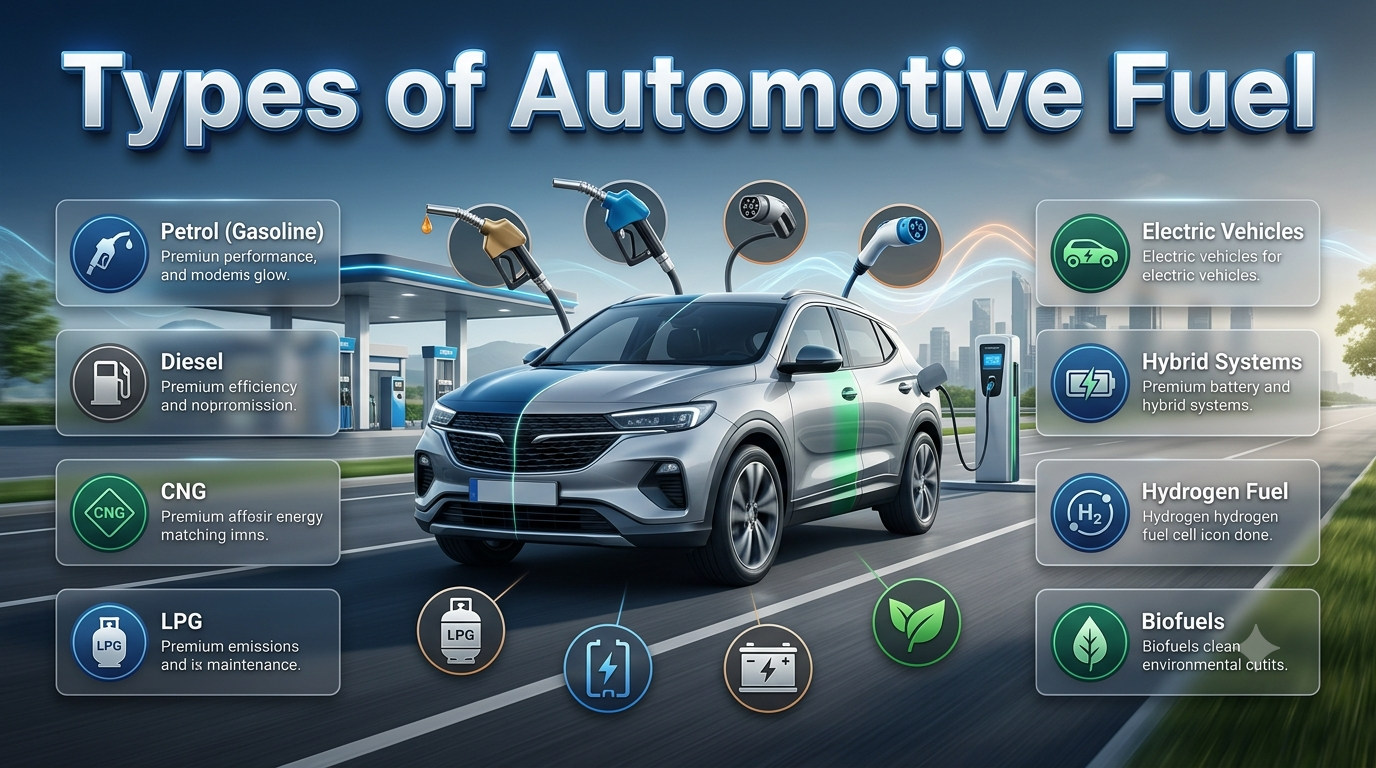
Types of Automotive Fuel | Automotive fuel powers every vehicle on the road, but not all fuels are the same. Choosing the right fuel affects engine performance, fuel economy, maintenance costs, emissions, and even the lifespan of your vehicle. Whether you drive a compact car, luxury SUV, commercial truck, or hybrid vehicle, understanding the Types of Automotive Fuel helps you make smarter decisions every time you refuel.
In situations where drivers ran out of fuel in Dubai 👉 Fuel Delivery Dubai, knowing the different types of automotive fuel can also help you understand what fuel your vehicle requires before arranging a delivery.
In this guide, you’ll learn about every major fuel type used in modern vehicles, how each one works, where it’s commonly used, and the advantages and disadvantages of each. We’ll also compare fuel options, explain industry trends, and help you choose the best fuel for your needs.
What Are Types of Automotive Fuel?
Automotive fuels are energy sources designed to power internal combustion engines, hybrid systems, or alternative-fuel vehicles. Each fuel has unique chemical properties that influence engine efficiency, emissions, operating costs, and vehicle compatibility.
The transportation industry relies on several fuel types because no single fuel is ideal for every application. Passenger cars, heavy trucks, motorcycles, construction equipment, and commercial fleets often require different fuel solutions depending on performance requirements and environmental regulations.
Today’s automotive fuels include conventional petroleum fuels, cleaner gaseous fuels, renewable biofuels, electricity, and hydrogen.
If you’re new to vehicle fuels, it’s worth reading Fuel Fundamentals first. It explains the basics of fuel properties, combustion, and why choosing the right fuel matters for your vehicle.
Why Understanding Automotive Fuel Types Matters
Many drivers simply pull up to the fuel station and choose the pump recommended for their vehicle. However, understanding fuel types offers several important benefits.
It helps you:
- Improve engine performance
- Reduce fuel expenses
- Increase engine lifespan
- Lower emissions
- Avoid costly fueling mistakes
- Understand alternative fuel options
- Make better vehicle purchasing decisions
As governments encourage cleaner transportation and manufacturers introduce new technologies, knowing the differences between fuel types becomes even more valuable.
Main Types of Automotive Fuel
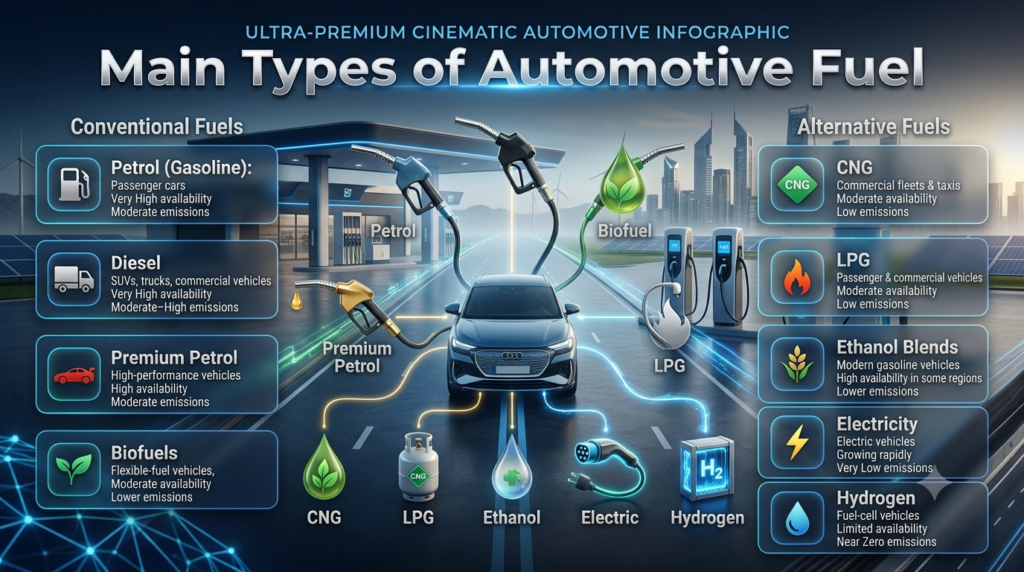
Today’s automotive industry mainly uses the following fuel categories:
| Fuel Type | Primary Vehicle Type | Availability | Emissions |
|---|---|---|---|
| Petrol (Gasoline) | Passenger cars | Very High | Moderate |
| Diesel | SUVs, trucks, commercial vehicles | Very High | Moderate-High |
| Premium Petrol | High-performance vehicles | High | Moderate |
| Biofuels | Flexible-fuel vehicles | Moderate | Lower |
| CNG | Commercial fleets, taxis | Moderate | Low |
| LPG | Passenger and commercial vehicles | Moderate | Low |
| Ethanol Blends | Modern gasoline vehicles | High in some regions | Lower |
| Electricity | Electric vehicles | Growing rapidly | Very Low |
| Hydrogen | Fuel-cell vehicles | Limited | Near Zero |
Petrol (Gasoline)
What Is Petrol?
Petrol is the world’s most commonly used automotive fuel for passenger vehicles. It is a refined petroleum product designed to ignite quickly using spark plugs inside gasoline engines.
Petrol engines are popular because they are:
- Smooth
- Quiet
- Lightweight
- Affordable
- Responsive
Most everyday cars use petrol because it delivers balanced performance for city and highway driving.
Where Petrol Is Commonly Used
Petrol powers:
- Sedans
- Hatchbacks
- Sports cars
- Crossovers
- Motorcycles
- Small SUVs
Advantages of Petrol
- Faster engine response
- Lower vehicle purchase cost
- Quieter engine operation
- Easier cold starts
- Lower maintenance than diesel in many cases
Disadvantages
- Lower fuel economy than diesel
- Higher fuel consumption
- Higher CO₂ emissions than some alternatives
- Fuel prices fluctuate frequently
Pro Tip:
Always use the octane rating recommended by your vehicle manufacturer. Higher octane fuel doesn’t automatically improve performance unless your engine is specifically designed for it.
Diesel
What Is Diesel Fuel?
Diesel is a heavier petroleum-based fuel used in compression-ignition engines. It contains more energy per liter than petrol, making it more fuel-efficient for long-distance driving and heavy-duty applications.
Diesel engines generate high torque, making them ideal for carrying heavy loads.
Common Diesel Vehicles
Diesel is commonly used in:
- Pickup trucks
- Commercial vans
- Heavy trucks
- Buses
- Construction machinery
- Large SUVs
Benefits of Diesel
- Better fuel economy
- High torque output
- Excellent for towing
- Longer engine life with proper maintenance
- Lower fuel consumption over long distances
Drawbacks
- Higher maintenance costs
- More expensive repairs
- Louder engine
- Higher NOx emissions
- Diesel particulate filter maintenance
Best Applications
Diesel is ideal for:
- Fleet vehicles
- Logistics companies
- Highway driving
- Heavy commercial transport
- Frequent long-distance travel
Common Mistake:
Many buyers choose diesel because of its fuel economy without considering their driving habits. If you mainly drive short city trips, a diesel engine may experience issues like clogged emission systems and increased maintenance.
Premium Petrol
What Is Premium Fuel?
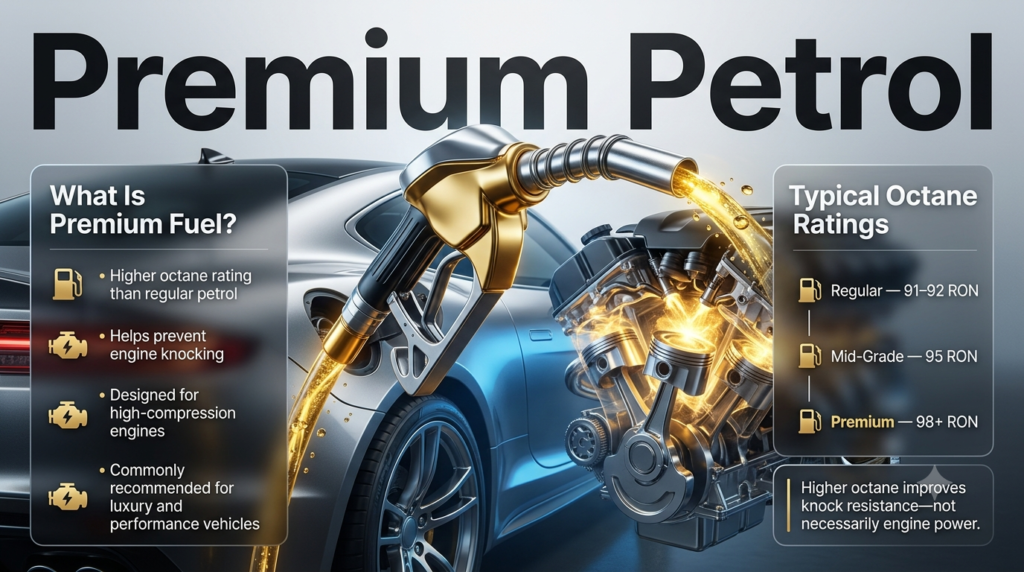
Premium petrol has a higher octane rating than regular gasoline. Higher octane helps prevent engine knocking in high-compression engines but does not necessarily increase power in vehicles designed for regular fuel.
Luxury and performance vehicles often require premium fuel to operate efficiently.
Typical Octane Ratings
| Fuel Grade | Typical Octane |
|---|---|
| Regular | 91–92 RON |
| Mid-Grade | 95 RON |
| Premium | 98+ RON |
Benefits
- Better knock resistance
- Improved combustion in performance engines
- Supports turbocharged engines
- Protects high-compression engines
Limitations
- More expensive
- No benefit for engines designed for regular petrol
- Increased operating costs if unnecessary
Compressed Natural Gas (CNG)
What Is CNG?
Compressed Natural Gas (CNG) is a cleaner-burning gaseous fuel stored under high pressure. It produces fewer harmful emissions than petrol or diesel and is commonly used in commercial fleets and public transportation.
Many governments encourage CNG because of its environmental advantages.
Advantages
- Lower fuel costs
- Cleaner emissions
- Longer engine life
- Reduced carbon monoxide emissions
- Less engine oil contamination
Disadvantages
- Limited refueling stations
- Reduced cargo space due to storage tanks
- Lower driving range
- Lower engine power compared to petrol
Best Uses
CNG works well for:
- Taxi fleets
- Delivery vehicles
- Urban transportation
- Commercial fleets
- High-mileage drivers
Liquefied Petroleum Gas (LPG)
What Is LPG?
Liquefied Petroleum Gas (LPG), also known as Autogas, is a mixture of propane and butane stored as a liquid under pressure. It is widely used as an alternative fuel because it burns cleaner than conventional fuels while reducing operating costs.
Benefits
- Lower fuel prices
- Cleaner combustion
- Reduced emissions
- Quiet engine operation
Drawbacks
- Conversion costs
- Limited filling stations in some regions
- Slightly lower engine power
- Additional maintenance for conversion systems
Suitable Vehicles
LPG is commonly used in:
- Passenger cars
- Fleet vehicles
- Taxi services
- Delivery vans
Biofuels
What Are Biofuels?
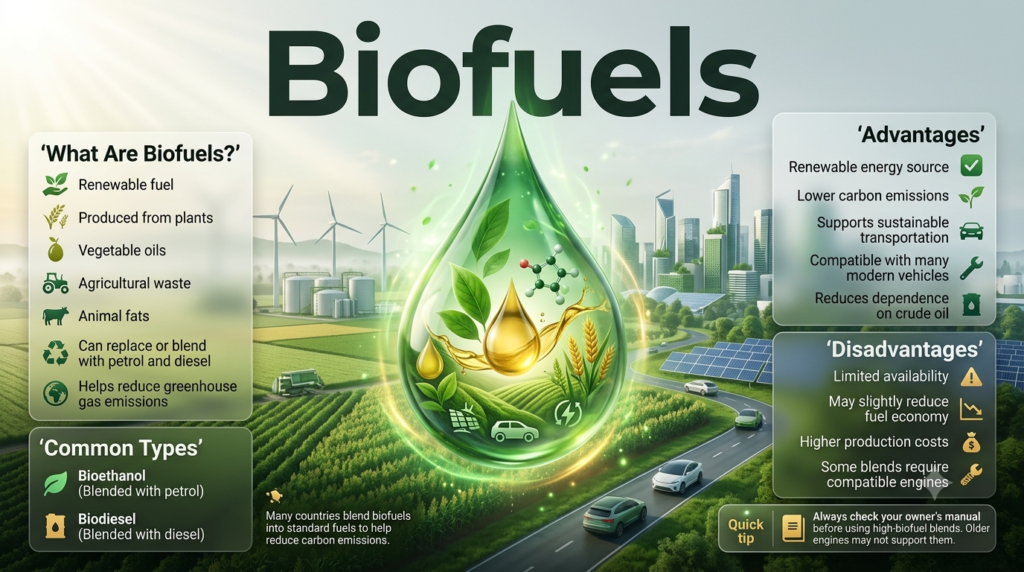
Biofuels are renewable fuels produced from organic materials such as plants, vegetable oils, agricultural waste, and animal fats. They can replace or blend with conventional petrol and diesel to reduce greenhouse gas emissions and dependence on fossil fuels.
Unlike traditional fuels, biofuels are considered more sustainable because their raw materials can be replenished over time.
Common Types of Biofuels
The two most widely used biofuels are:
- Bioethanol – Blended with petrol
- Biodiesel – Blended with diesel
Many countries require fuel stations to sell fuels containing a certain percentage of biofuel to reduce carbon emissions.
Advantages of Biofuels
- Renewable energy source
- Lower carbon emissions
- Supports sustainable transportation
- Compatible with many modern vehicles
- Reduces dependence on crude oil
Disadvantages
- Not available everywhere
- May slightly reduce fuel economy
- Higher production costs
- Some blends require compatible engines
Quick Tip:
Always check your owner’s manual before using high-biofuel blends. While many modern vehicles support them, older engines may not.
Ethanol-Blended Fuel
What Is Ethanol Fuel?
Ethanol is an alcohol-based renewable fuel produced mainly from crops like corn and sugarcane. It is commonly blended with petrol to improve combustion efficiency and reduce harmful emissions.
Common fuel blends include:
- E5 (5% ethanol)
- E10 (10% ethanol)
- E15 (15% ethanol)
- E85 (85% ethanol for Flex-Fuel Vehicles)
Benefits
- Cleaner combustion
- Renewable fuel source
- Lower greenhouse gas emissions
- Helps reduce fossil fuel consumption
Drawbacks
- Slightly lower fuel economy
- High ethanol blends require compatible vehicles
- Can absorb moisture if stored improperly
Best Applications
Ethanol blends are suitable for:
- Daily passenger vehicles
- Flex-fuel vehicles
- Countries promoting renewable fuels
Biodiesel
What Is Biodiesel?
Biodiesel is a renewable diesel alternative made from vegetable oils, used cooking oil, or animal fats. It works in many diesel engines with little or no modification, depending on the blend ratio.
Common biodiesel blends include:
| Blend | Biodiesel Content |
|---|---|
| B5 | 5% Biodiesel |
| B10 | 10% Biodiesel |
| B20 | 20% Biodiesel |
| B100 | 100% Biodiesel |
Advantages
- Renewable and biodegradable
- Cleaner exhaust emissions
- Better lubrication for diesel engines
- Reduces carbon footprint
Limitations
- Cold-weather performance can decrease
- Slightly lower energy content
- Limited availability in some regions
Electric Vehicles (EVs)

Conventional Vehicle Fuels
Conventional Vehicle Fuels include established options such as petrol, diesel, CNG, and LPG that continue to play an important role in modern transportation. Each fuel has different characteristics that can influence engine performance, fuel efficiency, maintenance requirements, emissions, refueling convenience, and overall operating costs.
Understanding these differences helps drivers, businesses, and fleet managers make better decisions based on vehicle type, daily mileage, load, driving conditions, fuel availability, and long-term operating needs. Whether you’re comparing traditional fuel options or choosing a practical solution for a commercial fleet, having a clear understanding of conventional vehicle fuels is an important step toward efficient, reliable, and cost-effective vehicle operation.
Looking for more detailed insights? Click here to explore a complete guide to 👉 conventional vehicle fuels, including fuel types, performance, efficiency, maintenance, and practical applications.
What Is Electricity as Automotive Fuel?
Electric vehicles use electricity stored in rechargeable batteries instead of burning liquid fuel. Electric motors convert electrical energy directly into motion, making EVs highly efficient and environmentally friendly.
Unlike petrol or diesel vehicles, EVs produce zero tailpipe emissions.
Types of Electric Vehicles
- Battery Electric Vehicles (BEVs)
- Plug-in Hybrid Electric Vehicles (PHEVs)
- Hybrid Electric Vehicles (HEVs)
Advantages
- Zero tailpipe emissions
- Lower running costs
- Quiet operation
- Instant torque
- Less routine maintenance
Challenges
- Charging infrastructure varies by location
- Longer charging time than refueling
- Higher purchase price
- Battery replacement can be expensive
Best For
- Daily commuting
- City driving
- Environmentally conscious drivers
Pro Tip:
Home charging is often the most convenient and cost-effective way to own an electric vehicle if you have access to dedicated parking.
Hydrogen Fuel
What Is Hydrogen Fuel?
Hydrogen fuel powers fuel-cell electric vehicles (FCEVs), where hydrogen reacts with oxygen to produce electricity. The only tailpipe emission is water vapor, making it one of the cleanest automotive fuel options available today.
Advantages
- Zero harmful tailpipe emissions
- Fast refueling
- Long driving range
- Quiet operation
Disadvantages
- Very limited fueling stations
- High production costs
- Expensive vehicle technology
- Infrastructure still developing
Alternative Automotive Fuels at a Glance
| Fuel Type | Renewable | Engine Type | Best For |
|---|---|---|---|
| Petrol | No | Petrol Engine | Everyday driving |
| Diesel | No | Diesel Engine | Heavy-duty transport |
| CNG | No | CNG Engine | Commercial fleets |
| LPG | No | LPG Conversion | Cost savings |
| Ethanol | Yes | Petrol Engine | Cleaner combustion |
| Biodiesel | Yes | Diesel Engine | Lower emissions |
| Electricity | Yes | Electric Motor | Urban commuting |
| Hydrogen | Yes | Fuel Cell | Future mobility |
How to Choose the Right Automotive Fuel
The best automotive fuel depends on your vehicle, driving habits, operating costs, and local fuel availability.
Before choosing a fuel type, consider:
- Your vehicle manufacturer’s recommendations
- Annual driving distance
- Fuel prices in your area
- Maintenance costs
- Environmental impact
- Availability of fueling stations
For example:
- City drivers may benefit from electric or hybrid vehicles.
- Long-distance travelers often prefer diesel.
- Performance cars usually require premium petrol.
- Commercial fleets may reduce costs with CNG or LPG.
Comparison Table: Petrol vs Diesel vs CNG vs Electric
| Feature | Petrol | Diesel | CNG | Electric |
|---|---|---|---|---|
| Fuel Cost | Medium | Medium | Low | Lowest |
| Vehicle Price | Lower | Higher | Medium | Highest |
| Maintenance | Medium | Higher | Medium | Low |
| Driving Range | High | Very High | Medium | Varies |
| Emissions | Moderate | Moderate-High | Low | Very Low |
| Best For | Daily Driving | Long Distance | Fleets | City Use |
If you’re looking for reliable fuel services, emergency refueling, or expert automotive resources, explore Fuel Delivery Dubai.
Common Mistakes When Choosing Automotive Fuel
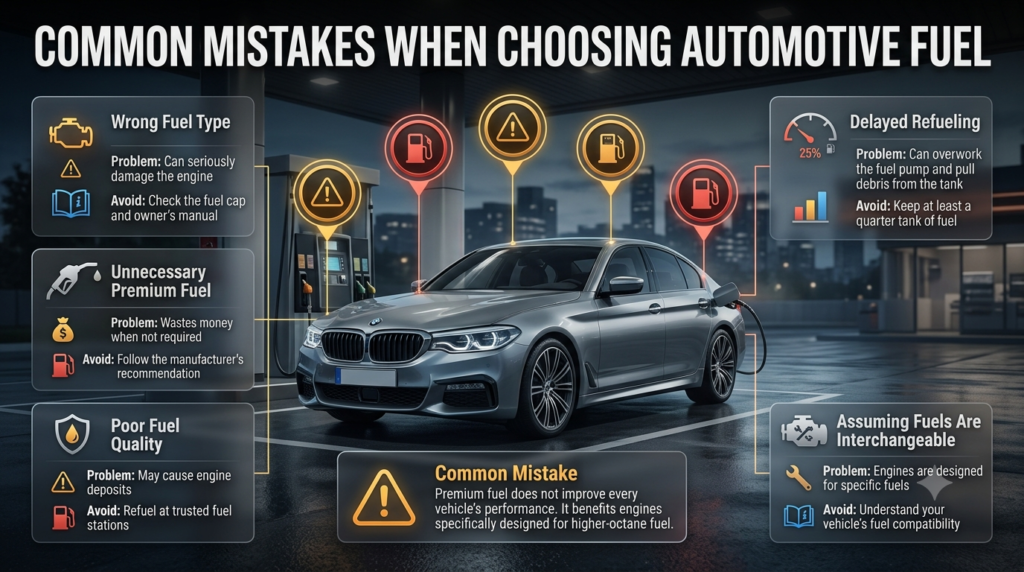
Using the wrong automotive fuel or misunderstanding fuel requirements can reduce performance, increase maintenance costs, and even damage your engine. Fortunately, most of these mistakes are easy to avoid with the right knowledge.
| Mistake | Why It’s a Problem | How to Avoid It |
|---|---|---|
| Using the wrong fuel type | Can seriously damage the engine | Always check the fuel cap and owner’s manual |
| Paying extra for premium fuel unnecessarily | Wastes money if your engine doesn’t require it | Follow the manufacturer’s fuel recommendation |
| Ignoring fuel quality | Poor-quality fuel may cause engine deposits | Refuel at trusted fuel stations |
| Delaying refueling regularly | Can overwork the fuel pump and pull debris from the tank | Keep at least a quarter tank of fuel |
| Assuming all fuels are interchangeable | Different engines are designed for specific fuels | Understand your vehicle’s fuel compatibility |
Common Mistake:
Many drivers believe premium fuel improves every vehicle’s performance. In reality, it only benefits engines specifically designed for higher-octane fuel.
Expert Advice for Choosing the Right Automotive Fuel
Automotive professionals don’t just focus on fuel price—they consider long-term operating costs, engine health, and driving conditions. Here are some practical recommendations experts follow:
- Always use the fuel grade recommended by your vehicle manufacturer.
- Buy fuel from reputable stations with high fuel turnover.
- Don’t ignore warning lights after accidentally using the wrong fuel.
- Consider your annual mileage before choosing between petrol, diesel, electric, or alternative fuels.
- Compare total ownership costs instead of fuel price alone.
- Keep your vehicle properly serviced to maximize fuel efficiency.
- Use premium fuel only when your engine requires it.
Expert Tip:
The cheapest fuel isn’t always the most economical. Better fuel efficiency, lower maintenance costs, and improved engine longevity often save more money over time.
What is the best type of automotive fuel for everyday driving?
The best automotive fuel depends on your vehicle’s engine, driving habits, and the manufacturer’s recommendations. For most drivers, regular petrol is the preferred choice because it offers a good balance of performance, affordability, and widespread availability. However, if you frequently drive long distances or use a vehicle for towing or commercial purposes, diesel may provide better fuel economy. Electric vehicles are becoming an excellent option for urban commuters, while CNG and LPG can reduce fuel costs in regions where they’re widely available.
Instead of choosing fuel based solely on price, consider the total cost of ownership, including maintenance, fuel efficiency, and engine longevity. Using the fuel your vehicle was designed for will always deliver the best overall results.
Key Points
Follow your vehicle manufacturer’s fuel recommendation.
Choose fuel based on your driving needs, not popularity.
Consider fuel efficiency and maintenance costs together.
Check local fuel availability before switching to an alternative fuel.
Can using the wrong fuel damage your vehicle?
Yes, using the wrong fuel can lead to serious engine problems, and in some cases, costly repairs. Filling a diesel vehicle with petrol reduces lubrication inside the fuel system, while putting diesel into a petrol engine can clog fuel injectors and prevent proper combustion. Even if the engine starts, continuing to drive can worsen the damage.
If you accidentally use the wrong fuel, avoid starting the engine. Contact a professional recovery or fuel-draining service immediately to minimize repair costs.
Key Points
Never start the engine after misfuelling.
The sooner the incorrect fuel is removed, the lower the risk of damage.
Always double-check the fuel pump before refueling.
Modern vehicles often have warning labels near the fuel cap—pay attention to them.
Is premium petrol worth paying extra for?
Premium petrol is only worth the additional cost if your vehicle’s engine is specifically designed for higher-octane fuel. High-performance and turbocharged engines often require premium petrol because it improves combustion stability and prevents engine knocking. For vehicles designed to run on regular petrol, switching to premium fuel usually provides little or no noticeable improvement in power, fuel economy, or engine life.
Rather than assuming premium fuel is always better, rely on your owner’s manual to determine the correct fuel grade.
Key Points
Premium fuel benefits high-compression engines.
Most standard vehicles perform perfectly on regular petrol.
Higher octane does not automatically increase horsepower.
Using unnecessary premium fuel increases operating costs without adding value.
What is the future of automotive fuel?
The future of automotive fuel is becoming more diverse rather than relying on a single energy source. While petrol and diesel will remain important for years, electric vehicles, hydrogen fuel-cell technology, biofuels, and synthetic fuels are rapidly gaining attention. Governments worldwide are investing in cleaner transportation, and manufacturers are developing vehicles with lower emissions and improved efficiency.
Instead of replacing conventional fuels overnight, the automotive industry is gradually transitioning toward a combination of traditional and alternative energy sources to meet different transportation needs.
Key Points
Electric vehicles continue to grow in popularity.
Hydrogen technology is expanding for commercial transportation.
Renewable fuels help reduce carbon emissions.
Petrol and diesel will remain relevant during the transition period.
How can I improve my vehicle’s fuel efficiency regardless of fuel type?
Improving fuel efficiency is about driving habits and regular vehicle maintenance as much as it is about fuel choice. A well-maintained engine, properly inflated tires, and smooth driving can significantly reduce fuel consumption. Aggressive acceleration, excessive idling, and carrying unnecessary weight all increase fuel usage, regardless of whether your vehicle runs on petrol, diesel, CNG, or electricity.
Small changes in daily driving can result in noticeable fuel savings over time while also reducing wear on your vehicle.
Key Points
Maintain the recommended tire pressure.
Service your vehicle according to the manufacturer’s schedule.
Accelerate and brake smoothly whenever possible.
Avoid carrying unnecessary weight in the vehicle.
Use the correct engine oil and recommended fuel grade for optimal performance.
Conclusion
Understanding the Types of Automotive Fuel is essential for making informed decisions about your vehicle’s performance, operating costs, and long-term reliability. From petrol and diesel to CNG, LPG, biofuels, electricity, and hydrogen, each fuel type offers unique advantages depending on your driving habits, vehicle requirements, and local fuel availability.
Rather than choosing a fuel based solely on price or popularity, it’s important to consider factors such as fuel efficiency, maintenance costs, environmental impact, and your vehicle manufacturer’s recommendations. Using the correct fuel not only helps your engine perform at its best but can also improve fuel economy, reduce unnecessary repairs, and extend the lifespan of your vehicle.
As the automotive industry continues to evolve, alternative fuels and cleaner energy technologies will play a larger role in transportation. However, conventional fuels will remain an important part of the market for years to come. Staying informed about different fuel options allows you to adapt to changing technologies and make smarter decisions whether you’re buying a new vehicle or simply filling up your tank.
For more expert insights on vehicle fueling, roadside assistance, and fuel-related guides, visit Fuel Delivery Dubai and explore our comprehensive Fuel Fundamentals resource to deepen your understanding of automotive fuels.
Leave a Reply