
Introduction
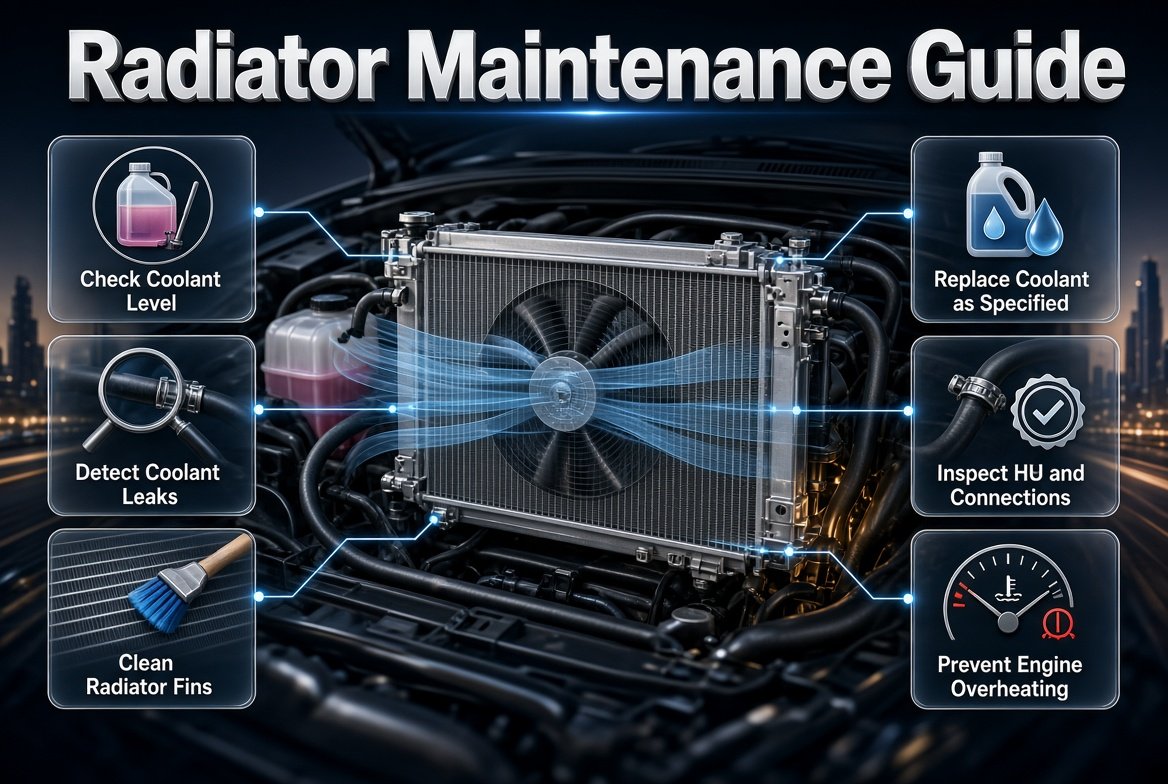
Radiator Maintenance Guide | A car engine can develop serious problems when its cooling system cannot remove heat effectively. A small coolant leak, blocked radiator fins, damaged hose, or faulty cooling fan may seem like a minor issue at first, but ignoring the warning signs can lead to overheating and expensive engine repairs. For drivers dealing with Dubai’s hot weather and busy roads, understanding radiator maintenance is particularly important.
Regular radiator maintenance helps keep the engine within its intended operating temperature range, protects cooling system components, and reduces the risk of unexpected breakdowns. It involves more than checking coolant levels or adding fluid when the reservoir looks low. Drivers also need to understand how the radiator works, how to identify leaks, when coolant should be replaced, and when professional diagnosis is necessary.
This radiator maintenance guide explains the practical steps involved in radiator care, common cooling system problems, safe inspection procedures, coolant replacement, radiator cleaning, and overheating prevention. Whether you want to perform basic checks yourself or understand what a technician should inspect, you will learn how to make informed maintenance decisions.
For additional vehicle care information and roadside assistance resources, visit Fuel Delivery Dubai. The aim is to help you understand your vehicle’s condition and take the right action before a minor cooling problem becomes a major repair.
What Is Radiator Maintenance?
Radiator maintenance is the process of inspecting and servicing the radiator and related cooling system components to ensure that engine heat can be transferred into the surrounding air effectively. It includes checking coolant levels, inspecting hoses and connections, looking for leaks, maintaining airflow, and following the manufacturer’s coolant service requirements.
The radiator is an important part of the engine cooling system, but it cannot operate independently. Coolant must circulate through the engine, the thermostat must regulate flow correctly, and the cooling fan must provide sufficient airflow when required.
Regular radiator maintenance helps you:
- Identify coolant leaks before fluid loss becomes severe.
- Reduce the risk of engine overheating.
- Detect corrosion, contamination, and restricted airflow.
- Protect the radiator, water pump, hoses, and other cooling components.
- Avoid unnecessary replacement of healthy parts.
- Maintain reliable engine temperature during everyday driving.
For example, if your vehicle’s temperature rises while waiting in traffic but returns to normal on the highway, the problem may involve cooling fan operation or airflow. A radiator restriction or another cooling system fault could produce similar symptoms. Inspection and testing are necessary to identify the actual cause.
Why Is Radiator Maintenance Important in Dubai?
Dubai’s high ambient temperatures can increase the demands placed on an engine cooling system. Traffic congestion, prolonged idling, frequent air-conditioning use, dust, and extended journeys can make effective cooling particularly important.
However, operating in a hot climate does not automatically mean a radiator needs frequent flushing or replacement. The correct approach is to maintain the vehicle according to its specified service schedule and investigate any unusual symptoms.
Drivers should pay particular attention to:
- Coolant levels that repeatedly fall below the recommended mark.
- Temperature changes during traffic congestion.
- Visible debris blocking the radiator and condenser.
- Damaged hoses or coolant residue around connections.
- Cooling fan problems and unusual engine temperature warnings.
- Previous overheating incidents or unresolved coolant leaks.
A properly maintained cooling system should manage normal operating conditions without persistent temperature warnings or unexplained coolant loss.
How Does a Car Radiator Work?
A car radiator transfers heat from hot engine coolant to the surrounding air. Coolant absorbs heat as it circulates through the engine and then passes through the radiator, where narrow tubes and fins help release that heat. The cooled fluid returns to the engine to absorb more heat.
Several components work together to maintain this process.
Main Components of the Cooling System
Radiator: Transfers heat from the coolant into the air. Internal restrictions, external blockage, physical damage, or leaks can reduce its effectiveness.
Coolant: Carries heat through the system and provides corrosion protection when the correct formulation and concentration are used.
Water pump: Circulates coolant through the engine and cooling system.
Thermostat: Regulates coolant flow according to engine temperature.
Cooling fan: Provides airflow when natural airflow through the radiator is insufficient.
Radiator hoses: Carry coolant between the engine, radiator, reservoir, and other cooling system components.
Pressure cap: Helps maintain the specified system pressure and supports coolant recovery in many conventional systems.
Coolant reservoir: Accommodates expanding coolant and, depending on the design, allows coolant to return to the system as it cools.
A failure in any of these components can affect overall cooling performance. This is why replacing the radiator without diagnosing the complete system may not resolve an overheating problem.
How Often Should You Maintain Your Car Radiator?
The correct radiator maintenance schedule depends on your vehicle model, coolant specification, driving conditions, and manufacturer recommendations. Basic visual checks can be performed regularly, while coolant replacement, pressure testing, and internal cleaning should be completed according to the service schedule or when a problem is identified.
The following table provides a practical starting point for routine care.
| Maintenance task | Suggested frequency |
|---|---|
| Check coolant reservoir level | Monthly and before long journeys |
| Inspect visible hoses and connections | Monthly or during routine vehicle checks |
| Observe temperature gauge and warnings | Every drive |
| Look for leaks or coolant residue | Whenever noticed |
| Inspect cooling fan and airflow | During servicing or when symptoms appear |
| Review coolant replacement history | At scheduled servicing |
| Replace coolant | According to the vehicle manufacturer’s schedule |
| Flush the cooling system | When required by the specified procedure or diagnosis |
| Pressure-test the system | When investigating leaks or other relevant symptoms |
These intervals are practical guidance rather than universal manufacturer specifications. Always use your owner’s manual for the exact service requirements.
Does a Hot Climate Require More Frequent Coolant Changes?
Not necessarily. High temperatures increase the importance of a properly functioning cooling system, but coolant replacement intervals depend on the specified fluid and vehicle design.
If you regularly drive in heavy traffic, carry heavy loads, or travel in dusty conditions, ask your technician whether additional inspections are appropriate. Inspection frequency and coolant replacement frequency are separate decisions.
Pro Tip: Keep a maintenance record showing coolant replacement dates, the coolant specification used, repairs, and any previous overheating incidents. This information helps technicians identify recurring problems and prevents unnecessary servicing.
How to Check Radiator Coolant Levels Safely
Checking the coolant reservoir is one of the simplest radiator maintenance tasks a vehicle owner can perform. It helps identify low coolant levels before they lead to more serious problems, although a normal level does not guarantee that the entire cooling system is working correctly.
Step 1: Park the Vehicle Safely
Park on level ground, switch off the engine, and allow it to cool completely.
Never open a radiator cap or pressurized coolant reservoir while the engine is hot. Hot coolant and steam can escape suddenly and cause serious burns.
If the vehicle has recently overheated, allow sufficient cooling time and follow the manufacturer’s instructions before performing any inspection.
Step 2: Locate the Correct Reservoir
Consult your owner’s manual to identify the engine coolant reservoir. Many vehicles have a translucent plastic tank marked MIN and MAX.
Do not confuse the coolant reservoir with the windshield washer fluid container. They serve different purposes and require different fluids.
Some vehicles have a pressurized expansion tank rather than a conventional radiator cap. Follow the vehicle-specific procedure instead of assuming every cooling system is designed the same way.
Step 3: Check the Coolant Level
With the engine cold, compare the fluid level against the reservoir markings.
- If the level is between MIN and MAX, it is generally within the marked range.
- If the level is below MIN, check for visible leaks and follow the manufacturer’s instructions for topping up.
- If the reservoir is repeatedly empty, arrange a cooling system inspection.
- If the level is unexpectedly high or the fluid appears contaminated, seek advice before making adjustments.
A small change between checks may have several explanations, but a repeated or sudden drop should not be ignored.
Step 4: Use the Correct Coolant
Use coolant that meets the manufacturer’s required specification. Coolant colour alone does not establish compatibility.
Different formulations use different additive technologies and may be designed for particular engine materials and cooling system requirements. Mixing incompatible products can reduce protection or contribute to deposits.
If the existing coolant is unknown, avoid randomly adding another formulation. A technician can identify the required fluid and determine whether the system needs topping up, replacement, or further investigation.
Step 5: Monitor the Level Afterward
After topping up a cold system according to the manual, monitor the level over the following days and observe the temperature gauge during normal driving.
If the level falls again, investigate the cause instead of continuing to add fluid.
Common Mistake: Repeatedly topping up coolant without finding the cause of the loss can hide a developing leak. A temporary correction does not repair the underlying problem.
How to Inspect Radiator Hoses and Connections
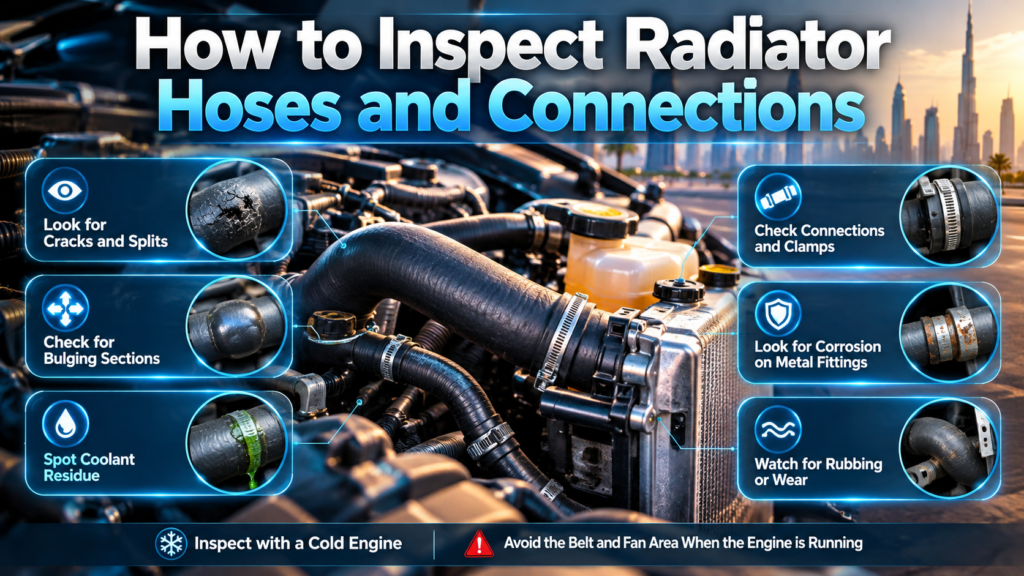
Radiator hoses carry coolant between the engine, radiator, and other cooling components. Over time, heat exposure, pressure cycles, vibration, and material deterioration can affect their condition.
A damaged hose may begin with a small leak before failing more seriously. Regular visual inspection helps identify problems early.
What Should You Look For?
With the engine completely cold, visually inspect accessible hoses and connections for:
- Cracks, splits, or damaged outer surfaces.
- Bulging or unusually swollen sections.
- Coolant residue near hose ends and clamps.
- Damp areas around connections.
- Corrosion around metal fittings.
- Signs of rubbing against sharp edges or nearby components.
Inspect the larger radiator hoses and any smaller coolant hoses that are accessible. Some modern vehicles use molded hoses, plastic connections, or specialized assemblies, so do not force components into a position simply to inspect them.
Should You Squeeze Radiator Hoses?
A gentle check of a cold, accessible hose may reveal obvious deterioration, but feel alone cannot confirm whether the hose is safe. Some hoses are naturally firm, and excessive squeezing may damage weakened components.
Never reach near belts or cooling fans while the engine is running. Electric fans can start unexpectedly, even when the engine is switched off.
When Should a Hose Be Replaced?
Replacement is appropriate when inspection confirms deterioration, leakage, physical damage, or failure to meet the manufacturer’s requirements.
If one hose has failed, ask the technician to inspect the remaining hoses, clamps, and connections. This helps establish whether additional repairs are justified by their actual condition.
Replacing every hose automatically is not always necessary, but ignoring visibly deteriorated hoses can increase the risk of coolant loss.
Keeping your engine at its recommended operating temperature requires regular maintenance and attention to early warning signs. In Dubai, high ambient temperatures, congested roads, and extended periods of idling can make cooling-system condition especially important. Check the coolant level only when the engine is completely cold, look for visible leaks around accessible hoses and connections, and monitor the temperature gauge during everyday driving. Follow the manufacturer’s recommendations for coolant type, servicing intervals, and cooling-system inspections instead of replacing components without a confirmed diagnosis. If the temperature rises above its normal range, an overheating warning appears, or steam comes from under the bonnet, stop in a safe place, switch off the engine, and allow it to cool. Never remove the radiator cap or open a pressurised coolant reservoir while it is hot. Persistent overheating or repeated coolant loss should be investigated by a qualified technician, as the cause may involve several different cooling-system or engine components. For practical maintenance steps, common mistakes to avoid, and guidance on responding to overheating symptoms, consult our Engine Overheating Prevention Guide. It provides drivers with a clearer understanding of preventive checks and when professional diagnosis is necessary.s through a damaged radiator, hose, connection, reservoir, pressure cap, water pump, or another part of the cooling system. Early diagnosis helps prevent fluid loss from progressing into overheating.
How to Identify Radiator Leaks
A radiator leak occurs when coolant escapeUser Guide: Essential Checks to Prevent Engine Overheating
Not every leak produces a visible puddle directly beneath the radiator. Coolant may travel along engine components, collect on an undertray, or evaporate from hot surfaces.
Common Signs of Coolant Leakage
Look for:
- Repeatedly low coolant levels.
- Coloured residue around the radiator or hoses.
- Dampness near coolant connections.
- A sweet or unusual coolant-like smell.
- Steam from the engine compartment.
- Unexplained temperature changes.
- A puddle beneath the vehicle.
Coolant colours vary by formulation, and a puddle alone cannot confirm its source. Clear water beneath a car, for example, may simply be air-conditioning condensation.
How to Check for a Leak
- Park on a level surface and let the engine cool completely.
- Check the coolant reservoir level.
- Inspect accessible hoses, connections, and the radiator area.
- Look for residue or dampness beneath the vehicle.
- Note when the symptoms occur and whether coolant loss is recurring.
- Arrange professional testing if the source is not obvious.
Do not crawl beneath an inadequately supported vehicle or touch hot engine components to locate a leak.
What Is a Cooling System Pressure Test?
A pressure test uses suitable equipment to apply the pressure specified by the vehicle manufacturer and identify leaks that may not be visible during a basic inspection. A separate cap test may be required to check whether the cap maintains the correct pressure.
Testing should be performed with the system prepared according to the manufacturer’s procedure. Excessive pressure can damage components.
If no external leak is found, additional diagnosis may be necessary to investigate internal coolant loss or a temperature-dependent fault.
Expert Tip: If coolant loss returns after a repair, ask the technician to verify the repair and check for other potential leak sources. Stopping one visible drip does not always resolve the underlying problem.
How to Clean a Car Radiator Properly
Radiator cleaning involves two different tasks: removing external debris that restricts airflow and addressing internal contamination within coolant passages. Each requires a different approach.
How to Clean the Outside of a Radiator
Dust, insects, leaves, and road debris can collect on the radiator and air-conditioning condenser. Heavy buildup may restrict airflow and reduce heat transfer.
A safe external inspection includes:
- Allowing the vehicle to cool completely.
- Inspecting the visible front cooling area for debris.
- Removing loose material only when it can be done safely.
- Using a gentle, suitable cleaning method.
- Checking for damaged or bent fins.
Radiator fins are delicate. Aggressive pressure washing, sharp tools, and forceful brushing can bend the fins and reduce airflow.
On many vehicles, the air-conditioning condenser sits in front of the radiator. Dirt or damage affecting either component can influence airflow through the cooling pack.
If access is restricted, or debris is packed deep between components, professional cleaning may be safer than attempting to remove parts yourself.
How to Clean the Inside of a Radiator
Internal cleaning addresses deposits, contamination, or restrictions within coolant passages. It is not automatically necessary at every service.
A technician may recommend a flush when there is evidence of contamination, a specified service requirement, or a diagnosed restriction for which flushing is appropriate.
The process should use the correct procedure and compatible products. Some vehicles require specialized filling and bleeding methods after coolant has been drained.
If the radiator is severely corroded, leaking, or internally damaged, flushing alone may not restore reliable performance.
Radiator Cleaning: DIY or Professional?
| Task | Appropriate approach |
|---|---|
| Inspect visible external dirt | Basic owner inspection |
| Remove loose, accessible debris | Gentle cleaning |
| Clean delicate cooling fins | Suitable low-pressure technique |
| Investigate internal deposits | Professional assessment |
| Flush contaminated coolant | Manufacturer-approved procedure |
| Diagnose persistent overheating | Complete cooling system testing |
| Repair severe internal damage | Repair or replacement assessment |
Quick Tip: Avoid household detergents, unapproved chemical cleaners, and random flushing products. Incorrect chemicals can affect seals, metals, or coolant additives.
When Should You Replace or Flush Radiator Coolant?
Coolant replacement and radiator flushing are related but different procedures. Replacement renews the fluid according to the vehicle’s requirements, while flushing removes old fluid and, when appropriate, helps clear contamination or deposits.
Neither should be performed on an arbitrary schedule without considering the manufacturer’s specifications.
Signs That Coolant Service May Be Needed
- The manufacturer’s replacement interval has been reached.
- Contamination or incompatible fluid has been identified.
- Rust-like deposits or unusual debris are present.
- A repair requires draining the cooling system.
- Testing indicates that the coolant no longer meets the required condition or specification.
Discoloured coolant can indicate contamination, but appearance alone does not always establish its remaining service life. Clear-looking coolant may also be overdue for replacement.
Why Coolant Type Matters
Coolant formulations differ in corrosion protection, additive technology, and compatibility with particular engine materials and seals.
Choose the fluid specified for the vehicle rather than relying on colour or a general description such as long-life coolant. If the coolant type is unknown, obtain professional guidance before mixing products.
What Happens During Professional Coolant Service?
Depending on the vehicle and the reason for servicing, a technician may:
- Confirm the correct coolant specification.
- Inspect the cooling system for leaks and contamination.
- Drain the old coolant when required.
- Flush the system if the condition and procedure justify it.
- Refill using the specified coolant mixture.
- Remove trapped air using the manufacturer’s method.
- Check for leaks and verify the coolant level.
- Confirm that the engine operates within its intended temperature range.
Some vehicles require specialized filling equipment or electronic procedures to remove trapped air. Incorrect bleeding can cause poor heater performance, temperature fluctuations, or overheating.
Used coolant must also be collected and disposed of appropriately. Do not pour it onto the ground or into drains.
How to Prevent Radiator Overheating in Dubai
Dubai’s high ambient temperatures can make effective engine cooling especially important. Congestion, prolonged idling, heavy loads, and limited airflow at low speeds can increase cooling demands. Dust and debris may also restrict airflow through the radiator and condenser.
The right approach is to maintain the system according to its specifications and investigate symptoms early rather than assuming the climate requires every component to be replaced more frequently.
1. Monitor the Temperature Gauge
Learn your vehicle’s normal operating behaviour. A sudden change, warning light, or temperature reading outside the normal range needs attention.
Do not ignore a warning simply because the vehicle appears to drive normally.
2. Maintain the Correct Coolant Level
Check the reservoir regularly when the engine is cold. If the level repeatedly falls, arrange an inspection instead of relying on frequent top-ups.
3. Keep the Cooling Pack Clear
Have heavy dust or debris buildup removed safely. Avoid high-pressure cleaning that can bend fins or damage nearby components.
4. Maintain Cooling Fan Operation
If engine temperature rises while stationary but improves when driving, ask a technician to check fan operation, electrical controls, sensors, and airflow restrictions.
The symptom can indicate an airflow issue, but other faults must also be considered.
5. Follow the Correct Coolant Schedule
Use the specified formulation and replacement interval. Hot weather is not, by itself, a reason to ignore the manufacturer’s coolant requirements or adopt an arbitrary flushing schedule.
6. Address Minor Leaks Promptly
A small leak may worsen as the system heats and pressurizes. Early diagnosis can help prevent further coolant loss and reduce the risk of overheating.
7. Inspect the Vehicle Before Long Journeys
Before a longer trip, check the coolant level, look for visible leaks, and confirm that there are no unresolved temperature warnings. If the vehicle has recently overheated, arrange a proper inspection before travelling.
What Should You Do If the Car Overheats in Traffic?
If the temperature gauge rises abnormally or an overheating warning appears, pull over somewhere safe as soon as practical. Follow the manufacturer’s instructions and switch off the engine when safely parked if the temperature remains excessive.
Do not continue driving simply because the destination is nearby.
Never remove a hot radiator cap or open a hot pressurized reservoir. Keep clear of escaping steam and wait for the system to cool completely before any permitted inspection.
If the vehicle has suffered severe overheating, arrange professional assistance rather than restarting it and hoping the temperature will return to normal.
For a broader explanation of connected cooling components, fluid circulation, and temperature control, read our Cooling System Maintenance in Dubai guide. That article complements this radiator-focused guide by explaining the wider system in which the radiator operates.
What Are the Warning Signs of a Failing Radiator?
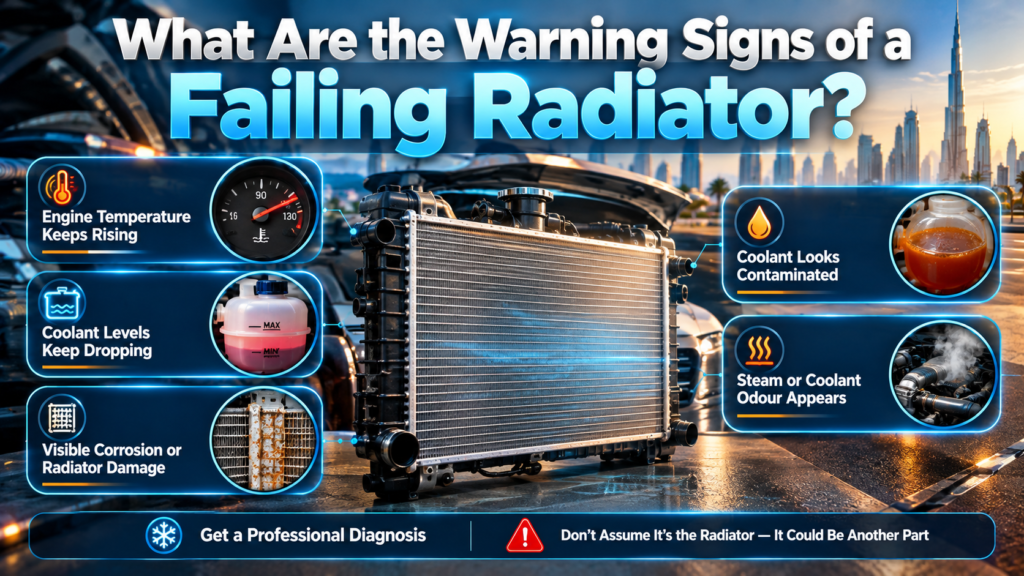
A failing radiator may cause overheating, coolant loss, corrosion, or inconsistent engine temperatures. However, these symptoms can also result from a faulty thermostat, water pump, cooling fan, pressure cap, or another component.
Correct diagnosis is more reliable than replacing the radiator based on a single symptom.
Engine Temperature Keeps Rising
An engine that repeatedly runs hotter than normal may have restricted coolant flow, insufficient airflow, low coolant, or another cooling system fault.
Note when the problem occurs. Overheating in traffic, during highway driving, or shortly after starting the engine can help a technician narrow down the possibilities.
Coolant Levels Keep Dropping
Repeated coolant loss is not normal simply because the vehicle operates in a hot climate. A leak, incorrect filling procedure, or internal engine problem may be responsible.
If the reservoir repeatedly falls below its minimum mark, arrange an inspection instead of continuing to top it up without diagnosis.
Visible Corrosion or Radiator Damage
Corrosion, damaged fins, leaking seams, or deteriorated connections may affect radiator performance. The technician should assess whether cleaning, repair, or replacement is appropriate.
Coolant Looks Contaminated
Rust-like particles, sludge, oil-like contamination, or unusual deposits may indicate a problem with coolant condition or the cooling system.
Do not assume every colour change means the radiator has failed. The fluid specification, service history, and test results help establish the cause.
Steam or Coolant Odour Appears
Steam from the engine compartment, a strong coolant smell, or visible coolant escaping may indicate a leak or overheating condition.
Stop driving when necessary, keep clear of hot components, and arrange professional assistance if the cause cannot be safely resolved.
Radiator Problems Compared With Other Cooling System Problems
Knowing the difference between a radiator fault and another cooling system problem helps prevent unnecessary parts replacement. Similar symptoms can have different causes, so the following table is a guide rather than a substitute for diagnostic testing.
| Symptom | Possible causes | Recommended next step |
|---|---|---|
| Overheating in traffic | Cooling fan fault, airflow restriction, low coolant | Check fan operation and cooling system condition |
| Overheating at highway speeds | Restricted radiator, circulation issue, other engine fault | Professional diagnosis |
| Repeated coolant loss | Hose leak, radiator leak, water pump leak, internal leak | Inspect and pressure-test as appropriate |
| Temperature fluctuations | Low coolant, trapped air, thermostat or circulation problem | Verify level and investigate circulation |
| Coolant residue near radiator | Leaking seam, hose connection, cap, or nearby component | Identify the leak source |
| Poor cabin heating | Low coolant, trapped air, heater circuit fault | Inspect cooling and heating circuits |
| Oil-like contamination in coolant | Possible internal engine or oil-cooler issue | Arrange prompt professional diagnosis |
Why the Thermostat Matters
The thermostat regulates coolant flow according to engine temperature. If it sticks closed, circulation through the radiator may be restricted and overheating can occur. If it remains open, the engine may take longer to reach its intended operating temperature.
A technician can test the thermostat and compare the results with the vehicle’s specified operating conditions. Replacing the radiator will not correct a thermostat fault.
Why the Water Pump Matters
The water pump circulates coolant through the engine and cooling system. A failing pump, damaged drive mechanism, or circulation problem can cause overheating even when the radiator itself is in good condition.
Depending on the vehicle, the pump may be belt-driven or electrically operated. Inspection and testing should follow the manufacturer’s procedures.
Why the Radiator Cap Matters
The pressure cap helps the cooling system operate at its designed pressure and supports coolant recovery in many conventional systems. A defective cap can contribute to coolant loss or improper pressure control.
Because pressure specifications differ, replacement should match the vehicle’s requirements. Never install a cap with an arbitrary pressure rating.
How to Build a Reliable Radiator Maintenance Routine
A reliable radiator maintenance routine combines simple owner checks with condition-based professional servicing. The goal is to notice changes early, record recurring symptoms, and confirm that the cooling system works correctly without replacing healthy components unnecessarily.
Step 1: Establish a Baseline
Learn the normal temperature behaviour of your vehicle and check the coolant level when the engine is cold.
Record the current level and any existing symptoms, such as a coolant smell after parking or a temperature rise in traffic. A clear baseline makes future changes easier to identify.
Step 2: Inspect Accessible Components
Look for visible leaks, damaged hoses, loose-looking connections, corrosion, and debris around the cooling pack. Avoid touching hot components or reaching near fans and belts.
If inspection requires removing covers or accessing hazardous areas, leave it to a qualified technician.
Step 3: Review Service History
Check when the coolant was last replaced, which specification was used, and whether the system has previously overheated or required repairs.
If the service history is unknown, a technician can assess the fluid and system condition before deciding what maintenance is necessary.
Step 4: Investigate Abnormal Symptoms
Do not treat repeated coolant loss, overheating, or contaminated fluid as routine maintenance issues.
Professional testing can determine whether the cause is a leak, restriction, circulation fault, pressure problem, or another engine issue.
Step 5: Service According to Evidence
Complete the maintenance required by the manufacturer and any additional work justified by inspection findings. This may include coolant replacement, pressure testing, hose replacement, fan diagnosis, or radiator cleaning.
The objective is to restore reliable cooling, not to replace parts simply because they are old or because the vehicle operates in Dubai.
Step 6: Verify the Repair
After service, the system should be filled and bled correctly where required, checked for leaks, and assessed under the manufacturer’s specified operating conditions.
Monitor the coolant level again when the engine is cold. If symptoms return, ask for further diagnosis rather than assuming the repair was successful.
Common Radiator Maintenance Mistakes to Avoid
Many cooling system problems become more serious because of incorrect maintenance decisions. Avoiding these mistakes can protect the engine and reduce unnecessary repair costs.
Opening the Radiator Cap While Hot
Why it happens: Drivers want to check coolant immediately after noticing a temperature warning.
Why it is dangerous: Pressurized hot coolant can escape suddenly and cause severe burns.
How to avoid it: Stop safely, follow the manufacturer’s overheating instructions, and wait until the system is completely cool before checking it.
Using Any Available Coolant
Why it happens: Different coolant products may look similar, and drivers may assume colour indicates compatibility.
Why it is harmful: Incompatible formulations can reduce corrosion protection or contribute to cooling system problems.
How to avoid it: Confirm the manufacturer’s specification before adding coolant.
Repeatedly Topping Up Without Finding the Leak
Why it happens: Adding fluid temporarily restores the reservoir level.
Why it is harmful: The underlying leak or internal fault remains unresolved and may lead to overheating.
How to avoid it: Record recurring level changes and arrange an inspection to identify the cause.
Flushing the Radiator Too Often
Why it happens: Some drivers believe more frequent flushing always means better protection.
Why it is harmful: Unnecessary or incorrect flushing can introduce compatibility problems, disturb deposits, or create issues if the system is refilled improperly.
How to avoid it: Follow the specified coolant replacement schedule and flush only when required by the service procedure or diagnosis.
Ignoring the Cooling Fan
Why it happens: The radiator receives attention while the fan is overlooked.
Why it is harmful: Insufficient airflow can cause overheating at low speeds even when the radiator is serviceable.
How to avoid it: Have the fan, controls, sensors, and related electrical components checked if temperature rises while stationary.
Treating Every Overheating Problem as a Bad Radiator

Why it happens: The radiator is the most visible part of the cooling system.
Why it is harmful: Replacing it may not correct a thermostat, water pump, fan, pressure cap, or internal engine problem.
How to avoid it: Request a diagnosis that identifies the actual cause before authorizing replacement.
Using High-Pressure Water on Cooling Fins
Why it happens: Drivers want to remove dust quickly.
Why it is harmful: Excessive pressure can bend delicate fins and reduce airflow.
How to avoid it: Use an appropriate gentle cleaning method or have a technician clean the cooling pack safely.
Continuing to Drive After an Overheating Warning
Why it happens: The driver hopes the temperature will return to normal.
Why it is harmful: Continued operation under severe overheating conditions can cause major engine damage.
How to avoid it: Pull over safely and follow the manufacturer’s instructions. Arrange assistance if the warning persists or coolant is escaping.
What Should a Professional Radiator Inspection Include?
A professional radiator inspection should determine whether the cooling system can circulate coolant, transfer heat, maintain the specified pressure, and control engine temperature correctly. The exact tests depend on the vehicle, symptoms, service history, and inspection findings.
Visual Inspection
The technician examines accessible radiator surfaces, hose connections, clamps, reservoir condition, and signs of corrosion or leakage.
The inspection should also consider the surrounding cooling pack, including the air-conditioning condenser where applicable.
Cooling System Pressure Test
A pressure test can help identify leaks that may not be visible during a basic inspection. The system and test equipment must be handled according to the manufacturer’s pressure specifications.
A test result should be interpreted alongside the vehicle’s symptoms. Some intermittent or temperature-dependent leaks may require further investigation.
Coolant Condition and Specification
The technician verifies the correct coolant type and assesses its condition. Depending on the vehicle and the concern, additional testing may be appropriate.
If contamination is present, identifying its source is important. Replacing the fluid without correcting an underlying fault may not solve the problem.
Thermostat and Water Pump Assessment
If coolant circulation appears abnormal, the thermostat, water pump, drive mechanism, and relevant controls may need to be tested.
The technician should consider the complete system rather than assuming the radiator is responsible for every temperature issue.
Cooling Fan and Airflow Testing
Fan operation, control signals, electrical connections, and airflow restrictions may be assessed when overheating occurs at low speeds or in traffic.
On some vehicles, fan operation depends on coolant temperature, air-conditioning demand, and electronic control logic. The absence of fan operation at one particular moment does not automatically prove a fault.
Air Removal and Final Verification
If the system has been drained or opened, the technician must follow the appropriate filling and bleeding procedure. Some vehicles require specialized equipment to remove trapped air.
After servicing, the system should be checked for leaks and evaluated under suitable operating conditions. The technician should also explain any remaining concerns and recommended follow-up work.
For maintenance checks beyond the radiator itself, use our Engine Maintenance Guide to explore broader engine care, fluid checks, and preventive servicing. Our Engine Inspection Checklist provides a complementary overview of the checks that help identify developing engine problems.
Radiator Maintenance Checklist for Car Owners
Use this checklist during routine vehicle checks and before longer journeys. It helps you identify warning signs without attempting repairs that require specialist equipment.
- Check the coolant level with the engine completely cold.
- Look for coolant leaks or residue around accessible components.
- Inspect accessible hoses for visible damage.
- Check for debris blocking radiator airflow.
- Observe the temperature gauge during driving.
- Note unusual coolant smells or steam.
- Review the coolant replacement history.
- Arrange diagnosis for repeated coolant loss.
- Confirm that previous cooling system repairs have been checked.
- Follow the manufacturer’s service schedule.
This checklist supports routine observations; it does not replace professional inspection or the manufacturer’s service requirements.
How Often Should You Perform Radiator Maintenance on Your Car?
Radiator maintenance should be performed regularly to identify coolant leaks, damaged hoses, restricted airflow, and other cooling system problems before they cause engine overheating. Basic visual checks can be carried out monthly, while coolant replacement and professional inspections should follow the vehicle manufacturer’s recommended maintenance schedule. In Dubai, where high temperatures and heavy traffic can increase cooling demands, monitoring the system’s condition is particularly important.
For effective radiator maintenance, focus on these essential checks:
Check coolant levels: Inspect the reservoir when the engine is completely cold and ensure the level is within the recommended range.
Inspect radiator hoses: Look for cracks, swelling, dampness, and coolant residue around connections.
Monitor engine temperature: Pay attention to unusual temperature changes, especially during traffic congestion.
Review coolant service history: Replace coolant according to the manufacturer’s specifications rather than following a universal interval.
Regular inspections help identify developing problems early, but repeated coolant loss or overheating requires proper diagnosis instead of routine monitoring alone.
What Are the Warning Signs of a Bad Radiator?
A faulty radiator may cause engine overheating, repeated coolant loss, visible leaks, corrosion, or inconsistent temperature readings. However, these symptoms can also result from a damaged hose, faulty thermostat, malfunctioning cooling fan, or water pump problem. Identifying the underlying cause is essential before deciding whether the radiator needs repair or replacement.
Watch for these common warning signs:
Frequent overheating: The temperature gauge rises above its normal operating range or an overheating warning appears.
Visible coolant leaks: Dampness, coloured residue, or coolant collecting beneath the vehicle may indicate a leak.
Repeatedly low coolant: The reservoir level continues to drop despite being topped up correctly.
Corrosion or physical damage: Rust-like deposits, damaged fins, or leaking radiator seams may affect cooling performance.
Unusual coolant contamination: Sludge or oil-like material may indicate a problem that requires further investigation.
If the engine overheats or steam escapes, stop safely and follow the manufacturer’s instructions. Never open a hot radiator cap. A professional cooling system inspection can establish whether the radiator or another component is responsible.
Can You Clean a Car Radiator Yourself, or Should You Hire a Professional?
You can perform basic external radiator maintenance yourself if the relevant components are safely accessible. Removing loose debris from the cooling area and checking for visible dirt or damage are reasonable starting points. Internal radiator flushing, leak testing, and cleaning that requires dismantling components are more complex and should be performed using the vehicle manufacturer’s recommended procedures.
The appropriate approach depends on the type of cleaning required:
External cleaning: Remove loose leaves and debris carefully without bending the radiator fins.
Internal flushing: Consider it only when required by the manufacturer’s procedure or when contamination or restrictions justify it.
Leak diagnosis: Use professional inspection and pressure testing when the source of coolant loss is unclear.
Post-service checks: Ensure the correct coolant is used and trapped air is removed where required.
Avoid aggressive pressure washing, household cleaning chemicals, and unapproved flushing products. Incorrect cleaning methods can damage delicate components or introduce further cooling system problems.
Which Coolant Should You Use for Radiator Maintenance in Dubai?
The correct coolant is the formulation that meets your vehicle manufacturer’s specification. Dubai’s hot climate makes effective cooling important, but choosing coolant based only on temperature claims or fluid colour can lead to compatibility problems. Different coolant formulations provide different corrosion protection and may be designed for particular engine materials and cooling system requirements.
Before adding or replacing coolant, consider these points:
Check the owner’s manual: Confirm the required coolant specification and concentration.
Avoid choosing by colour alone: Similar-looking fluids are not necessarily compatible.
Do not mix unknown products: If the existing coolant type is uncertain, seek professional advice before topping up.
Follow the correct replacement interval: Coolant service requirements vary between vehicles and formulations.
Check for recurring coolant loss: The correct fluid will not fix a leak or another mechanical fault.
Using the specified coolant helps protect the cooling system against corrosion and supports reliable heat transfer. If the wrong fluid has been added or contamination is suspected, have the system assessed to determine whether draining and refilling or another repair is necessary.
What Should You Do If Your Car Overheats While Driving in Dubai?
If your car overheats while driving, your priority should be personal safety and preventing further engine damage. High ambient temperatures and traffic congestion can make a cooling problem particularly concerning, but you should never assume that hot weather alone is responsible. A coolant leak, cooling fan failure, restricted radiator, or another mechanical issue may be involved.
Follow these steps when an overheating warning appears:
Pull over safely: Move away from moving traffic as soon as practical and follow the vehicle manufacturer’s overheating instructions.
Switch off the engine when safely parked: If the temperature remains excessive or a serious warning appears, stop the engine.
Keep clear of steam: Never open the radiator cap or pressurized coolant reservoir while hot.
Allow the system to cool completely: Do not attempt to inspect or refill a hot cooling system.
Arrange professional assistance: If coolant is escaping, the engine has overheated severely, or the cause is unknown, arrange recovery or roadside assistance rather than continuing to drive.
Identify the underlying fault: Before returning to normal driving, have the radiator, coolant level, hoses, cooling fan, thermostat, and other relevant components checked as appropriate.
Continuing to drive an overheating vehicle can turn a repairable cooling system problem into serious engine damage. The safest decision is to stop promptly and establish the cause before driving again.
Conclusion
A well-maintained radiator plays an essential role in keeping your engine at the correct operating temperature, preventing avoidable cooling-system problems, and supporting reliable vehicle performance. In Dubai, high ambient temperatures, heavy traffic, frequent idling, and regular air-conditioning use can increase the demands placed on your vehicle’s cooling system. Following a practical radiator maintenance routine helps you identify coolant leaks, damaged hoses, restricted airflow, and other warning signs before they develop into more serious problems.
The most effective approach is to check coolant levels when the engine is completely cold, inspect accessible hoses and connections, keep the radiator exterior free from airflow-blocking debris, and use the coolant specified by your vehicle manufacturer. Follow the recommended service intervals rather than relying on a fixed schedule that may not suit every vehicle. If you notice repeated coolant loss, rising engine temperatures, visible leaks, or warning lights, arrange a professional inspection instead of simply adding coolant and continuing to drive.
Radiator care should also be part of a wider preventive maintenance routine. Explore our Vehicle Maintenance Guides for practical advice on maintaining other essential vehicle systems, and use the Engine Maintenance Guide to understand how regular engine checks support long-term reliability. For a more systematic approach, our Engine Inspection Checklist can help you identify issues that may require further attention, while our Cooling System Maintenance in Dubai guide provides additional information about keeping the complete cooling system in good condition.
Remember that an overheating engine should never be ignored. If the temperature warning appears, pull over somewhere safe, switch off the engine, and allow it to cool. Never open a hot radiator cap or coolant reservoir, as pressurised coolant can cause severe burns. When a cooling-system problem affects your journey, visit Fuel Delivery Dubai for roadside fuel assistance when you need it.
Consistent inspections, the correct coolant, timely repairs, and sensible driving habits can help you protect your engine and reduce the risk of unexpected breakdowns. Make radiator maintenance a regular part of your vehicle care routine so your car is better prepared for Dubai’s demanding driving conditions.
Leave a Reply