Introduction
Whether you’re filling up your car for a daily commute or managing fuel for an entire commercial fleet, understanding fuel fundamentals can save you money, improve vehicle performance, and help prevent expensive repairs. Many drivers focus only on fuel prices, but the type and quality of fuel you use play a much bigger role in your vehicle’s efficiency and long-term reliability.
Fuel is more than just something that powers an engine. It is a carefully engineered energy source designed to meet specific performance standards. Using the wrong fuel, ignoring fuel quality, or overlooking proper storage practices can reduce engine efficiency, increase emissions, and even shorten the lifespan of important engine components.
If you’re looking for professional fuel solutions or want to learn more about on-demand fueling services, Fuel Delivery Dubai provides reliable fuel delivery solutions for individual drivers, businesses, and commercial fleets across Dubai.
In this comprehensive guide, you’ll learn what fuel fundamentals are, how fuel works inside an engine, the different types of automotive fuels, key fuel terminology, and how making informed fuel choices can improve both vehicle performance and operating costs.
What Are Fuel Fundamentals?
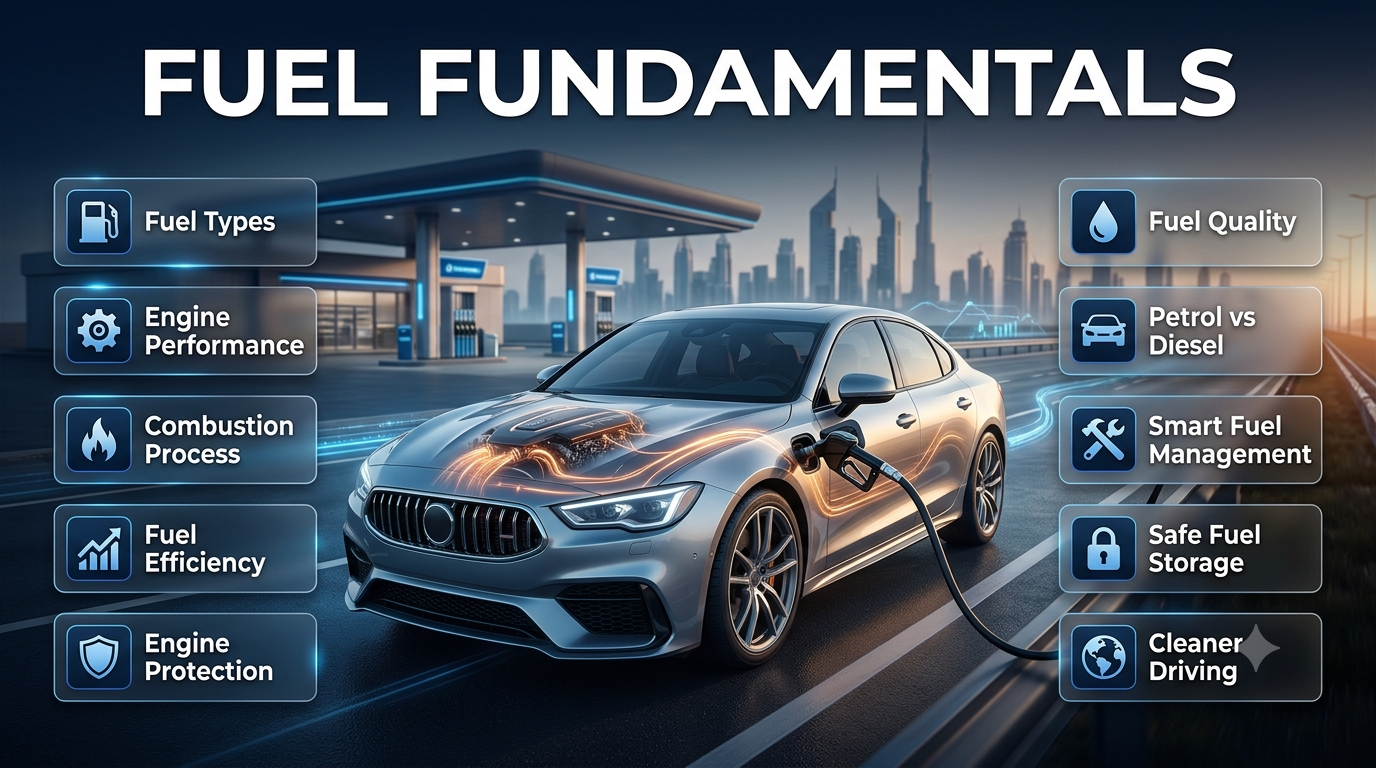
Fuel fundamentals are the basic principles that explain how fuel is produced, stored, delivered, and used to generate energy. They cover fuel types, fuel properties, combustion, efficiency, safety, and best practices for selecting and managing fuel.
Fuel is a substance that stores chemical energy. When it burns inside an engine, this chemical energy is converted into mechanical energy that powers the vehicle. Although this process seems simple, many factors influence how efficiently fuel performs.
Understanding fuel fundamentals helps drivers, mechanics, fleet managers, and businesses make smarter decisions regarding:
- Fuel selection
- Vehicle performance
- Fuel efficiency
- Engine protection
- Fuel storage
- Safe handling
- Fuel management
Whether you’re driving a compact sedan, a diesel pickup, or managing a fleet of delivery trucks, these principles remain essential.
Why Understanding Fuel Fundamentals Matters
Many vehicle owners only think about fuel when the tank is almost empty. In reality, fuel influences nearly every aspect of your vehicle’s operation.
Better Engine Performance
High-quality fuel allows an engine to operate efficiently by producing cleaner and more consistent combustion.
Benefits include:
- Smoother acceleration
- Stable engine performance
- Better throttle response
- Reduced engine knocking
- Improved reliability
Poor-quality fuel, on the other hand, can lead to deposits inside the fuel system, reduced power, and increased maintenance costs.
Lower Operating Costs
Fuel is one of the largest ongoing expenses for both personal and commercial vehicles.
Understanding fuel fundamentals helps you:
- Improve fuel economy
- Reduce unnecessary fuel consumption
- Choose the correct fuel grade
- Prevent avoidable repairs
For businesses operating multiple vehicles, even a small improvement in fuel efficiency can result in significant annual savings.
Companies that rely on scheduled refueling often work with professional providers such as Fuel Delivery Dubai to streamline fuel management and reduce downtime.
Longer Engine Life
Modern engines contain advanced components such as:
- Fuel injectors
- High-pressure fuel pumps
- Sensors
- Turbochargers
- Emission control systems
Using clean, high-quality fuel helps protect these components and minimizes wear over time.
Improved Environmental Performance
Efficient combustion doesn’t just improve performance—it also reduces unnecessary emissions.
Clean fuel combined with regular maintenance helps vehicles:
- Burn fuel more efficiently
- Produce fewer pollutants
- Maintain emission system performance
Pro Tip
Always use the fuel grade recommended by your vehicle manufacturer. Paying more for premium fuel doesn’t automatically improve performance if your engine isn’t designed to use it.
How Fuel Works Inside a Vehicle Engine
Fuel moves from the fuel tank to the engine, mixes with air, and undergoes combustion. The energy released during combustion is converted into mechanical power that turns the wheels.
Understanding this process makes it easier to diagnose fuel-related problems and appreciate why fuel quality matters.
Step 1: Fuel Storage
Every journey begins inside the fuel tank.
The tank stores fuel safely while protecting it from contaminants like dirt, moisture, and debris.
Modern fuel tanks are designed to:
- Prevent fuel evaporation
- Reduce contamination
- Maintain proper fuel pressure
- Improve overall safety
Step 2: Fuel Delivery
A fuel pump transfers fuel from the tank through the fuel lines toward the engine.
During this stage, fuel passes through filters that remove contaminants before reaching the injectors.
Without proper filtration, even tiny particles can damage sensitive engine components.
Step 3: Air and Fuel Mixing
Engines require the correct mixture of fuel and air.
Too much fuel causes inefficient combustion.
Too little fuel reduces power output.
Modern engine control systems continuously adjust this mixture based on:
- Engine speed
- Temperature
- Throttle position
- Driving conditions
Step 4: Combustion
Inside the combustion chamber:
- Petrol engines use spark plugs.
- Diesel engines rely on high compression.
Combustion releases energy that pushes the pistons downward.
This movement rotates the crankshaft and ultimately powers the wheels.
Fuel Combustion Process
Fuel Tank
     │
Fuel Pump
     │
Fuel Filter
     │
Fuel Injectors
     │
Fuel + Air
     │
Combustion
     │
Engine Power
     │
Vehicle Movement
Essential Fuel Terminology Every Driver Should Know
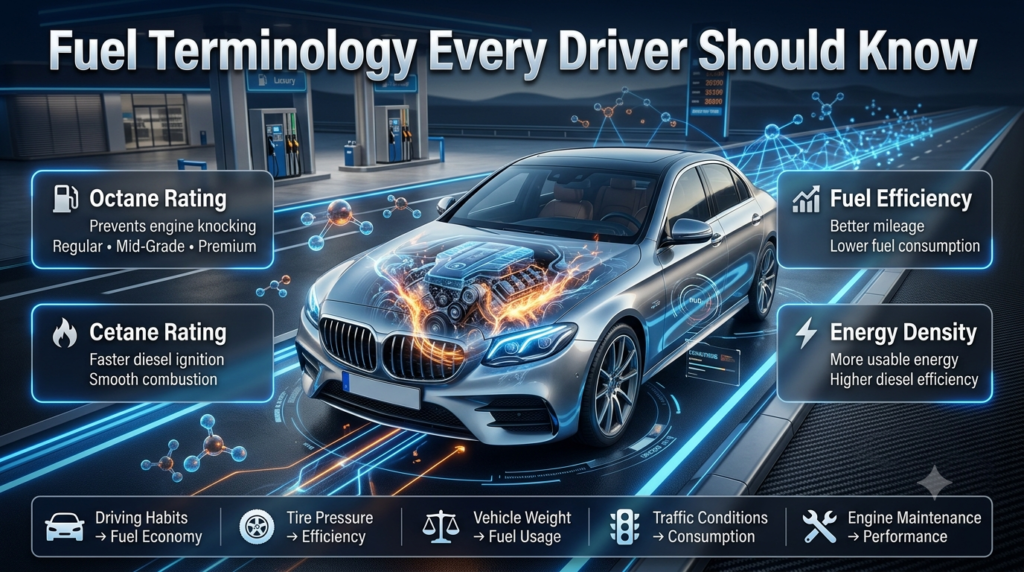
Understanding common fuel terms makes it much easier to choose the correct fuel and understand manufacturer recommendations.
Octane Rating
Octane rating measures a petrol fuel’s resistance to engine knocking.
Higher octane fuel is designed for engines with higher compression ratios.
Common fuel grades include:
- Regular
- Mid-grade
- Premium
Important
A higher octane number does not automatically mean better fuel.
If your owner’s manual recommends regular petrol, using premium fuel may provide little or no benefit.
Cetane Rating
Cetane rating applies to diesel fuel.
It measures how quickly diesel ignites after injection.
Higher cetane fuel generally provides:
- Faster ignition
- Smoother engine operation
- Better cold-weather starting
- Improved combustion
Fuel Efficiency
Fuel efficiency measures how effectively a vehicle converts fuel into distance traveled.
It is commonly expressed as:
- Kilometers per liter (km/L)
- Miles per gallon (MPG)
Several factors affect fuel efficiency, including:
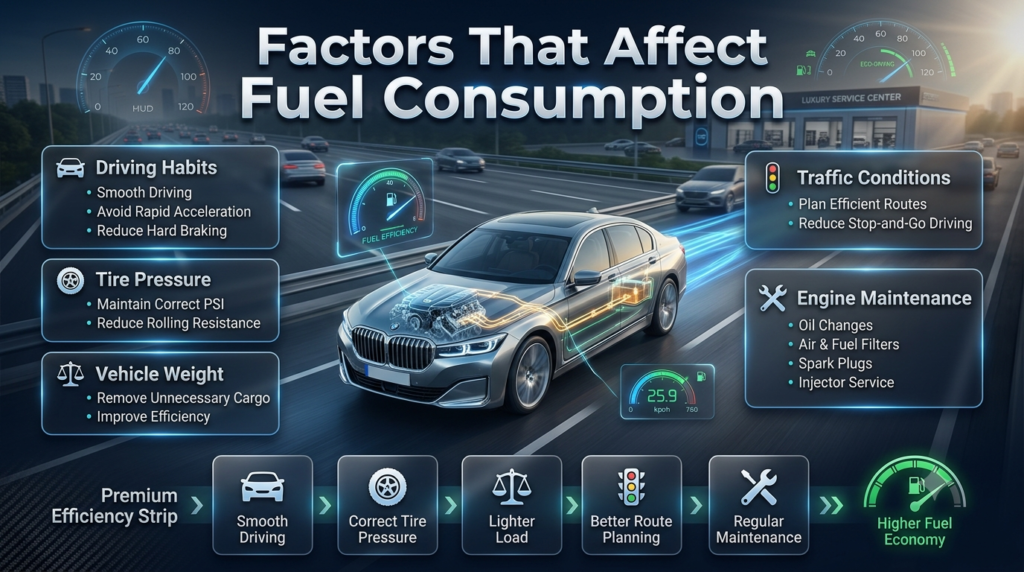
| Factor | Effect |
|---|---|
| Driving habits | Aggressive driving increases fuel consumption |
| Tire pressure | Low pressure reduces efficiency |
| Vehicle weight | Extra weight requires more fuel |
| Traffic conditions | Frequent stopping uses more fuel |
| Engine maintenance | Poor maintenance decreases efficiency |
Energy Density
Energy density refers to how much usable energy a fuel contains.
Diesel generally has a higher energy density than petrol, which helps explain why diesel-powered vehicles often achieve better fuel economy.
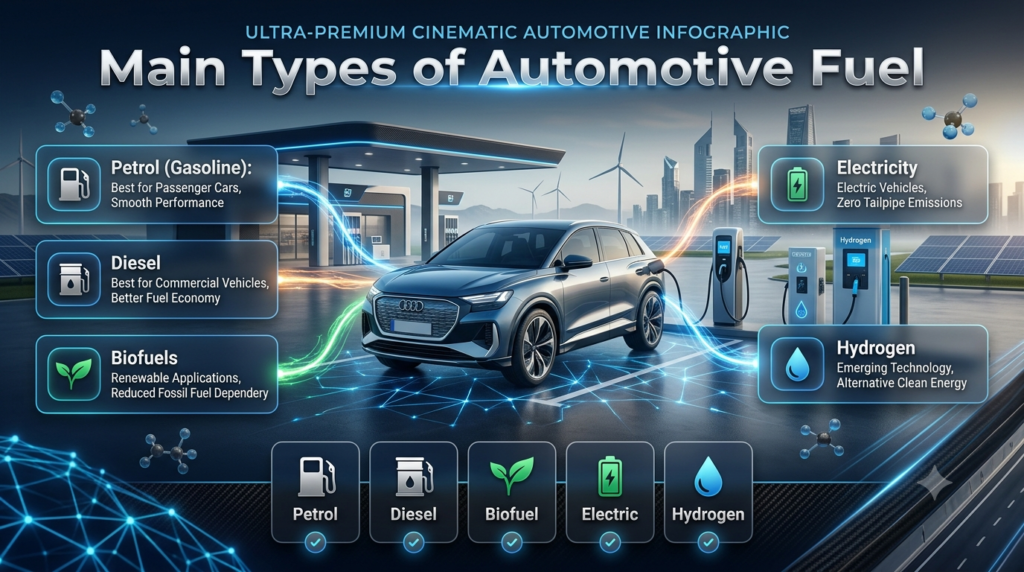
Main Types of Automotive Fuel
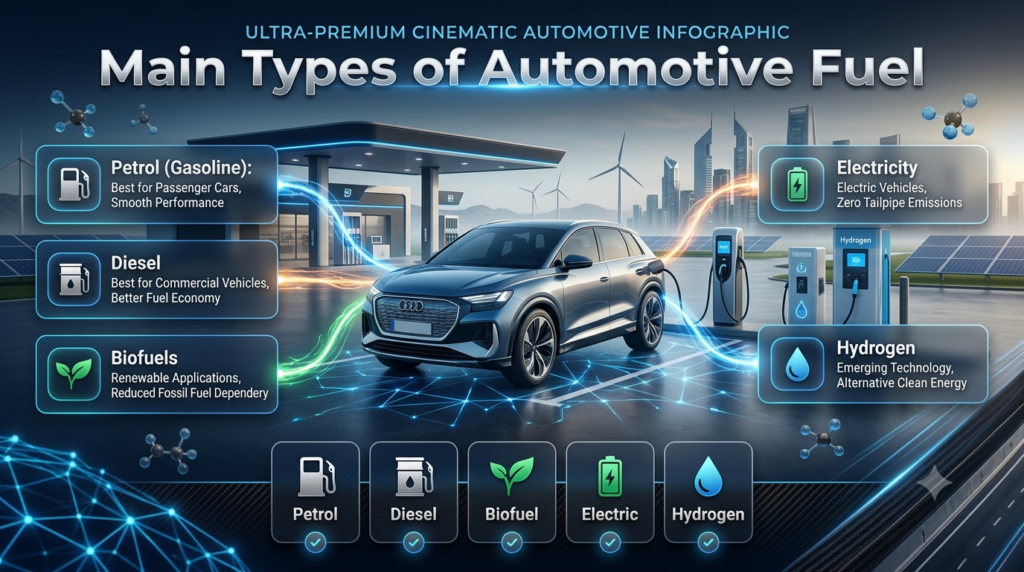
Different vehicles are designed to operate using different fuels.
Understanding these fuel types helps you select the most suitable option for your vehicle.
| Fuel Type | Best For | Main Advantage |
|---|---|---|
| Petrol (Gasoline) | Passenger cars | Smooth performance |
| Diesel | Commercial vehicles | Better fuel economy |
| Biofuels | Renewable applications | Reduced fossil fuel dependency |
| Electricity | Electric vehicles | Zero tailpipe emissions |
| Hydrogen | Emerging technology | Alternative clean energy |
Each fuel type has unique characteristics, advantages, and limitations.
Petrol (Gasoline) Fundamentals
Petrol is the most widely used automotive fuel worldwide.
It powers:
- Passenger cars
- Motorcycles
- Sports cars
- Small SUVs
Petrol engines use spark ignition technology, making them responsive and smooth during everyday driving.
Advantages of Petrol
- Smooth and quiet engine operation
- Better acceleration
- Lower purchase price for many vehicles
- Ideal for city driving
Limitations
- Lower fuel economy compared with diesel
- Less torque
- Higher fuel consumption during heavy-duty use
Diesel Fuel Fundamentals
Diesel is designed for vehicles requiring greater efficiency and pulling power.
It is commonly used in:
- Trucks
- Vans
- Buses
- Heavy SUVs
- Construction equipment
Diesel engines ignite fuel using compression rather than spark plugs.
Advantages of Diesel
- Better fuel economy
- Higher torque
- Excellent for towing
- Longer engine life under heavy workloads
Businesses operating commercial fleets often benefit from scheduled refueling services offered by Fuel Delivery Dubai, reducing downtime and ensuring vehicles remain operational throughout the day.
Limitations
- Higher maintenance complexity
- More expensive emission systems
- Higher upfront vehicle cost
Petrol vs Diesel Comparison
| Feature | Petrol | Diesel |
|---|---|---|
| Ignition | Spark Plug | Compression |
| Fuel Economy | Moderate | Higher |
| Torque | Lower | Higher |
| Maintenance | Generally Lower | Generally Higher |
| Best Use | Daily commuting | Heavy-duty work |
| Initial Cost | Lower | Higher |
Expert Tip
Choose your fuel type based on how you drive, not just fuel prices. A city commuter has different needs than someone managing a fleet of delivery vehicles.
Common Mistakes People Make
Mistake 1: Buying Fuel Only Based on Price
Cheaper fuel isn’t always the better choice.
Low-quality fuel can increase maintenance costs over time.
Mistake 2: Using the Wrong Fuel
Never assume all fuels are interchangeable.
Always follow your vehicle manufacturer’s recommendations.
Mistake 3: Ignoring Fuel Quality
Contaminated fuel may cause:
- Injector clogging
- Reduced engine power
- Increased emissions
- Poor fuel economy
Buying fuel from trusted suppliers and using professional fueling services helps minimize these risks.
Fuel Quality, Contamination, Fuel Efficiency & Safe Fuel Storage
Why Fuel Quality Matters
Many people assume that all fuel is the same. In reality, fuel quality can vary depending on refining standards, transportation, storage conditions, and handling practices. Even a small amount of contamination can affect how efficiently an engine operates.
Modern vehicles use sophisticated fuel injection systems that require clean fuel to function properly. Dirty or degraded fuel can interfere with combustion, reduce power, and increase wear on critical engine components.
Whether you’re filling up at a service station or using a professional fuel delivery provider, purchasing fuel from trusted sources is one of the easiest ways to protect your vehicle. Businesses that require regular on-site fueling often rely on Fuel Delivery Dubai to ensure a consistent supply of quality fuel without interrupting daily operations.
What Determines Fuel Quality?
Fuel quality depends on several important factors that influence how efficiently it performs inside an engine.
1. Refining Standards
Fuel begins as crude oil and undergoes an extensive refining process before reaching consumers.
High-quality refining helps produce fuel that:
- Burns more efficiently
- Reduces harmful deposits
- Supports cleaner combustion
- Meets environmental standards
Different countries follow different fuel quality regulations, making refining standards an important factor.
2. Storage Conditions
Fuel quality doesn’t only depend on production—it also depends on storage.
Poor storage can lead to:
- Water contamination
- Dirt accumulation
- Oxidation
- Fuel degradation
Professional fuel suppliers store fuel under controlled conditions to maintain its quality until delivery.
3. Transportation and Handling
Fuel changes hands several times before reaching your vehicle.
Proper transportation helps prevent:
- Cross-contamination
- Water intrusion
- Dirt entering storage tanks
This is one reason why choosing reliable fuel suppliers is so important.
4. Fuel Additives
Many fuel suppliers include additives designed to improve performance.
These additives may help:
- Clean fuel injectors
- Reduce engine deposits
- Improve combustion
- Prevent corrosion
- Increase fuel stability
Not every fuel contains the same additive package, so performance may vary between suppliers.
Signs of Poor Fuel Quality
Recognizing poor fuel early can help prevent expensive repairs.
Common warning signs include:
- Difficulty starting the engine
- Rough idling
- Reduced acceleration
- Lower fuel economy
- Engine hesitation
- Increased exhaust smoke
- Dashboard warning lights
- Engine knocking
If several of these symptoms appear immediately after refueling, poor fuel quality could be one possible cause.
Common Mistake
Ignoring unusual engine behavior after refueling.
Many drivers continue using contaminated fuel, allowing the problem to become worse.
Instead, investigate unusual performance changes as early as possible.
Common Fuel Contaminants
Fuel contamination occurs when unwanted substances enter the fuel supply.
Even small contaminants can interfere with combustion.
Water
Water is one of the most common fuel contaminants.
It may enter fuel through:
- Condensation
- Damaged storage tanks
- Poor handling
- Moisture exposure
Water inside fuel can:
- Reduce combustion efficiency
- Cause corrosion
- Damage injectors
- Promote microbial growth in diesel fuel
Dirt and Dust
Tiny particles may seem harmless but can cause significant damage.
Contaminated fuel may clog:
- Fuel filters
- Fuel injectors
- High-pressure pumps
Replacing these components can be expensive.
Rust
Metal fuel tanks may develop rust over time.
Rust particles entering the fuel system can damage sensitive engine components.
Routine maintenance helps reduce this risk.
Microbial Growth (Diesel Fuel)
Diesel fuel stored for long periods can develop microbial contamination when water is present.
Microorganisms form sludge that can:
- Block filters
- Restrict fuel flow
- Reduce engine performance
Commercial operators should inspect stored diesel regularly.
How Poor Fuel Affects Your Vehicle
Poor-quality fuel affects more than just engine performance.
Over time, it can increase maintenance costs and reduce vehicle reliability.
Reduced Engine Performance
Incomplete combustion reduces power output.
Drivers may notice:
- Sluggish acceleration
- Reduced responsiveness
- Poor throttle control
Lower Fuel Economy
Poor combustion wastes fuel.
The engine may consume more fuel while producing less usable power.
Increased Maintenance Costs
Contaminated fuel often damages:
- Fuel injectors
- Fuel pumps
- Filters
- Emission systems
Repairing these components is significantly more expensive than preventing contamination.
Increased Emissions
Poor combustion creates higher emissions.
This affects:
- Environmental performance
- Emission control systems
- Inspection compliance
Pro Tip
If your vehicle suddenly performs poorly after refueling, avoid continuing long trips until the issue has been inspected. Early diagnosis often prevents larger repairs.
Fuel Efficiency Explained
Fuel efficiency measures how effectively a vehicle converts fuel into useful distance or work. Better fuel efficiency reduces fuel costs and lowers environmental impact.
Fuel efficiency depends on both the vehicle and the driver.
Two identical vehicles can achieve very different fuel economy depending on how they are driven.
Factors That Affect Fuel Consumption
Driving Habits
Aggressive driving is one of the biggest causes of unnecessary fuel consumption.
Examples include:
- Rapid acceleration
- Hard braking
- High-speed driving
- Excessive idling
Smooth driving usually improves fuel economy.
Tire Pressure
Underinflated tires create additional rolling resistance.
This forces the engine to work harder.
Checking tire pressure regularly is one of the simplest ways to improve fuel efficiency.
Vehicle Weight
Extra weight requires more energy.
Removing unnecessary cargo helps reduce fuel consumption.
Traffic Conditions
Stop-and-go traffic increases fuel use because the engine repeatedly accelerates from low speeds.
Planning efficient routes can help reduce unnecessary fuel consumption.
Businesses managing multiple vehicles often optimize fueling schedules with Fuel Delivery Dubai to reduce unnecessary trips to fuel stations and improve fleet productivity.
Engine Maintenance
Regular maintenance keeps the engine operating efficiently.
Important maintenance includes:
- Oil changes
- Air filter replacement
- Fuel filter inspection
- Spark plug replacement (petrol engines)
- Injector maintenance
Ignoring maintenance often increases fuel costs.
Simple Ways to Improve Fuel Efficiency
Small changes can produce noticeable savings over time.
Maintain Correct Tire Pressure
Properly inflated tires reduce rolling resistance.
Drive Smoothly
Avoid sudden acceleration whenever possible.
Steady speeds improve fuel economy.
Reduce Unnecessary Idling
Idling consumes fuel without moving the vehicle.
Turn off the engine during long waits whenever appropriate.
Follow Maintenance Schedules
A properly maintained engine burns fuel more efficiently.
Choose Quality Fuel
Clean, high-quality fuel supports better combustion and protects the fuel system.
Fuel Storage Fundamentals
Proper fuel storage helps maintain fuel quality, prevents contamination, and reduces safety risks.
Whether fuel is stored for personal use or commercial operations, correct storage practices are essential.
Best Practices for Fuel Storage
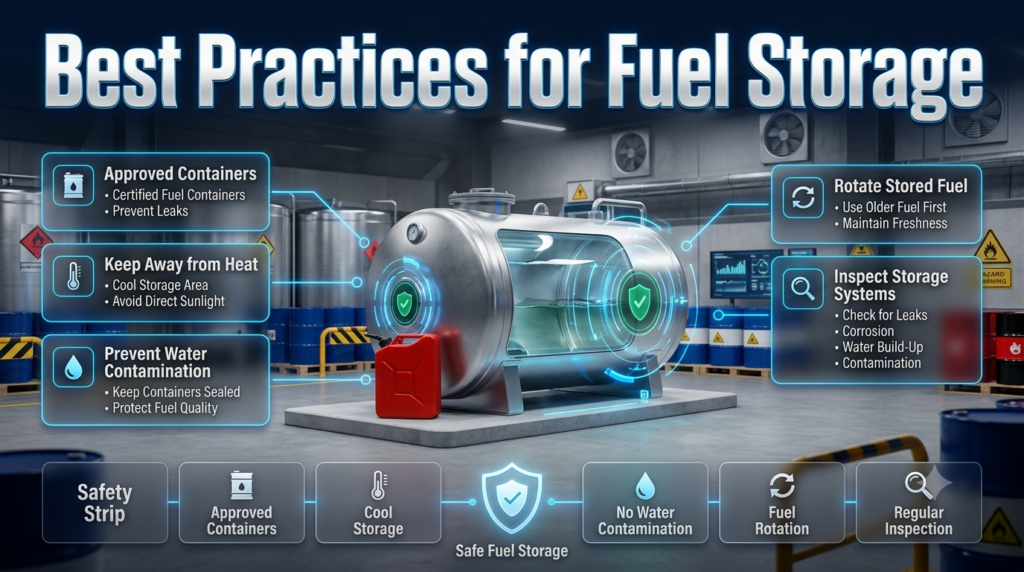
Store Fuel in Approved Containers
Only use containers specifically designed for fuel.
These containers reduce leakage and contamination.
Keep Fuel Away from Heat
Fuel should always be stored in cool, well-ventilated areas away from direct sunlight and ignition sources.
Prevent Water Contamination
Water is one of the biggest threats to stored fuel.
Keep containers tightly sealed.
Inspect storage tanks regularly.
Rotate Stored Fuel
Fuel should not remain unused for excessive periods.
Using older fuel first helps maintain quality.
Inspect Storage Systems
Commercial storage tanks should be inspected periodically for:
- Leaks
- Corrosion
- Water buildup
- Contamination
Professional fuel providers like Fuel Delivery Dubai follow strict storage and handling procedures to help maintain fuel quality from supply to delivery.
Fuel Safety Checklist
Use this checklist whenever storing or handling fuel.
✅ Store fuel only in approved containers
✅ Keep fuel away from flames
✅ Prevent contamination
✅ Inspect storage regularly
✅ Avoid overfilling containers
✅ Label fuel correctly
✅ Follow manufacturer recommendations
Expert Tip
Proper fuel storage isn’t only about safety—it also protects fuel quality. Clean, well-maintained storage systems reduce contamination and help engines operate more efficiently.
Understanding Fuel Delivery Fundamentals
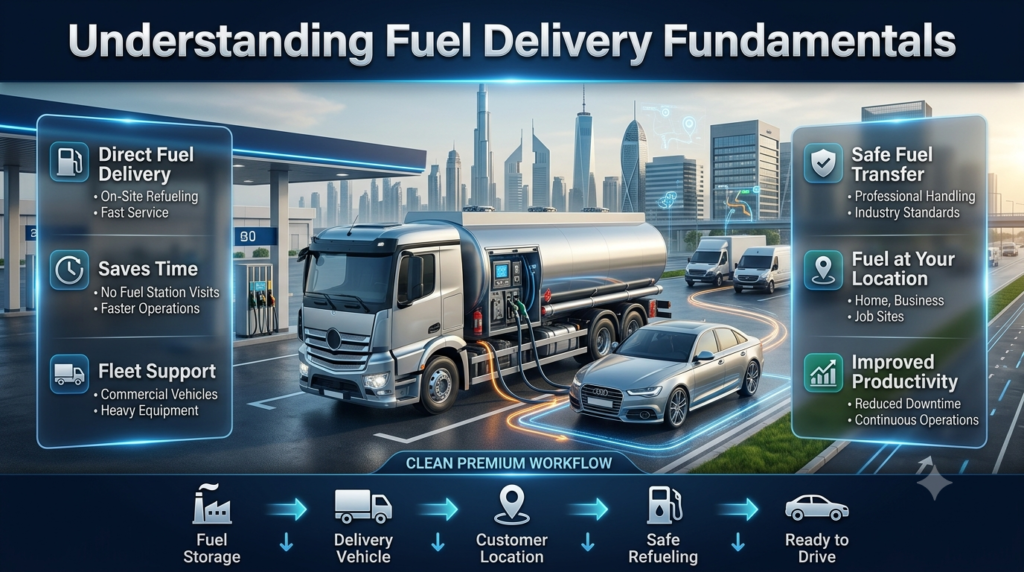
Fuel delivery is the process of transporting fuel safely from storage facilities or suppliers directly to vehicles, equipment, generators, or storage tanks. Modern fuel delivery services improve convenience, reduce downtime, and ensure businesses always have access to the fuel they need.
Fuel delivery has evolved significantly over the past decade. Instead of driving to a fuel station, individuals and businesses can now have fuel delivered directly to their location. This approach saves time, improves productivity, and reduces interruptions, especially for companies managing multiple vehicles or heavy equipment.
For drivers and businesses across Dubai, Fuel Delivery Dubai offers convenient on-site fuel delivery services that eliminate unnecessary trips to fuel stations and keep vehicles moving.
How Modern Fuel Delivery Works
Today’s fuel delivery process combines technology, logistics, and safety standards to provide efficient fueling solutions.
A typical delivery process follows these steps:
- Customer requests fuel delivery.
- Order details are verified.
- A fuel delivery vehicle is dispatched.
- Fuel is transported using approved safety procedures.
- Fuel is dispensed directly into the vehicle or storage tank.
- Delivery is completed and documented.
This streamlined process allows drivers and businesses to receive fuel where and when they need it.
Fuel Delivery Workflow
Fuel Supplier
      │
Storage Facility
      │
Delivery Vehicle
      │
Customer Location
      │
Safe Fuel Transfer
      │
Vehicle or Storage Tank
Benefits of Professional Fuel Delivery Services
Professional fuel delivery offers much more than convenience.
Saves Valuable Time
One of the biggest advantages is eliminating unnecessary trips to fuel stations.
Drivers can continue working while fuel arrives at their location.
For commercial businesses, this translates into higher productivity and fewer interruptions.
Reduces Vehicle Downtime
Vehicles that spend less time traveling for refueling spend more time serving customers.
Fleet operators particularly benefit because scheduled deliveries reduce idle time.
Improves Operational Efficiency
Managing fuel manually becomes increasingly difficult as businesses grow.
Professional services simplify:
- Fuel scheduling
- Delivery tracking
- Fuel inventory
- Fleet fueling
- Emergency supply
Companies using Fuel Delivery Dubai can streamline fuel operations while focusing on their core business activities.
Enhances Fuel Management
Reliable suppliers help businesses monitor:
- Fuel usage
- Delivery frequency
- Consumption trends
- Inventory levels
This information supports better operational planning.
Expert Tip
Businesses should create a regular fuel delivery schedule instead of waiting until vehicles or storage tanks are nearly empty. Scheduled deliveries reduce operational risks and improve efficiency.
Mobile Fuel Delivery Explained
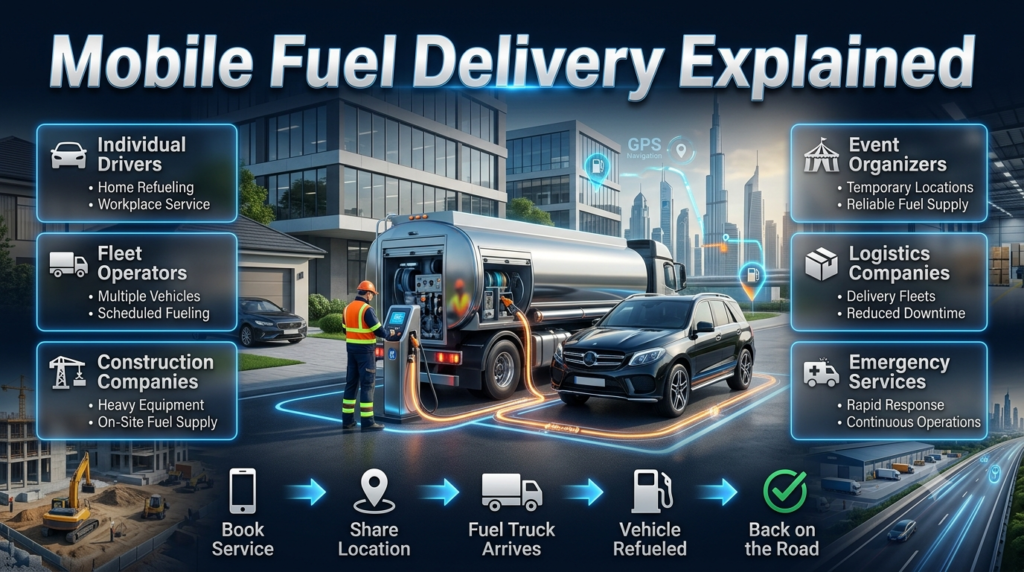
Mobile fuel delivery is an on-demand service where fuel is transported directly to vehicles or equipment at their current location instead of requiring customers to visit a fuel station.
Mobile fueling has become increasingly popular because it provides flexibility and convenience.
Common customers include:
- Individual drivers
- Fleet operators
- Construction companies
- Event organizers
- Logistics companies
- Emergency service providers
Instead of interrupting work, vehicles can be fueled while parked.
Advantages of Mobile Fuel Delivery
Convenience
Fuel arrives wherever it is needed.
This eliminates unnecessary travel and waiting time.
Time Savings
Drivers avoid:
- Fuel station queues
- Traffic delays
- Unplanned stops
Time savings become even more valuable for commercial operations.
Better Productivity
Fleet vehicles spend more time working and less time traveling for refueling.
Businesses can improve daily operations without increasing staff.
Flexible Scheduling
Many providers offer:
- Scheduled deliveries
- On-demand fueling
- Emergency refueling
- Fleet fueling programs
Professional providers such as Fuel Delivery Dubai allow customers to schedule fuel deliveries according to operational requirements.
Emergency Fuel Delivery
Running out of fuel can happen unexpectedly.
Common situations include:
- Long-distance travel
- Incorrect fuel calculations
- Heavy traffic
- Unexpected route changes
- Fuel gauge issues
Emergency fuel delivery provides immediate assistance without requiring drivers to leave their vehicles or arrange towing services.
This service is especially valuable in large cities where reaching the nearest fuel station may not always be convenient.
Common Mistake
Waiting until the fuel tank is nearly empty before refueling.
Frequently driving with very low fuel levels may increase stress on the fuel pump and increase the risk of unexpected breakdowns.
Whenever possible, refuel before the fuel level becomes critically low.
Commercial Fuel Delivery Solutions
Commercial fuel delivery supports businesses that depend on reliable fuel supplies every day.
Typical industries include:
- Transportation
- Logistics
- Construction
- Manufacturing
- Warehousing
- Marine operations
- Agriculture
Instead of sending employees to fuel stations, fuel is delivered directly to business locations.
This reduces lost working hours and improves operational planning.
Fleet Fueling Explained
Fleet fueling is a service where multiple business vehicles are refueled at a central location, reducing downtime and improving fuel management.
Fleet fueling is ideal for organizations operating:
- Delivery vans
- Company cars
- Trucks
- Buses
- Service vehicles
Professional fleet fueling services often include:
- Scheduled deliveries
- Usage reports
- Fuel monitoring
- Inventory management
Businesses managing growing vehicle fleets frequently partner with Fuel Delivery Dubai to simplify fleet fueling and reduce operational delays.
Benefits of Fleet Fueling
| Benefit | Business Impact |
|---|---|
| Reduced downtime | Vehicles remain operational |
| Better scheduling | Predictable fuel availability |
| Centralized fueling | Easier management |
| Improved productivity | Less time spent refueling |
| Better fuel tracking | Easier budgeting |
Fuel Management for Businesses
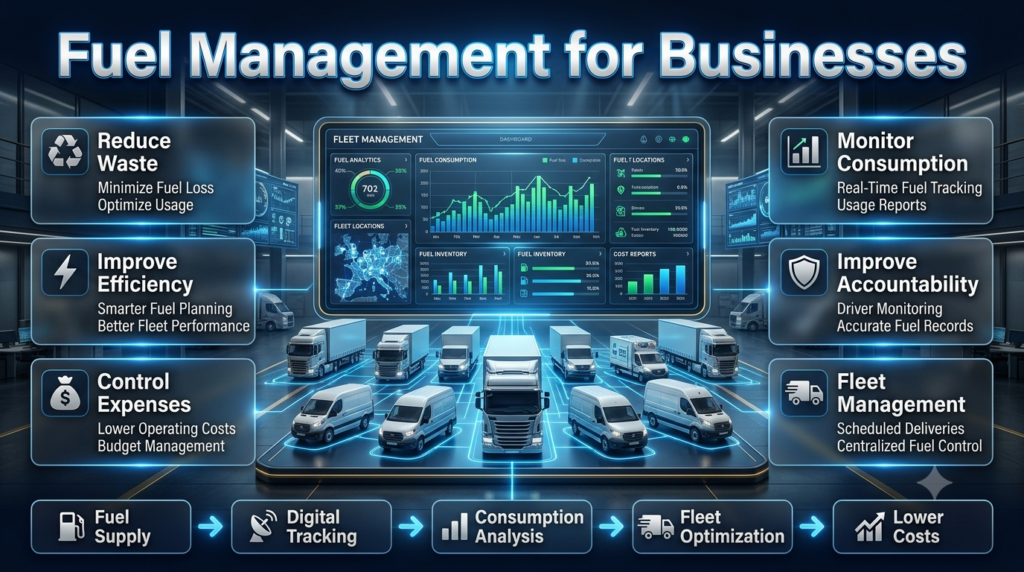
Fuel management is more than purchasing fuel.
It involves monitoring, planning, and controlling fuel usage across an organization.
Effective fuel management helps businesses:
- Reduce waste
- Improve efficiency
- Control expenses
- Monitor consumption
- Improve accountability
Businesses with large fleets often combine fuel management software with scheduled delivery services.
Fuel Monitoring Systems
Modern fuel management increasingly relies on technology.
Fuel monitoring systems help organizations track:
- Daily fuel usage
- Fuel inventory
- Delivery schedules
- Vehicle consumption
- Refueling history
Accurate data allows businesses to identify unusual fuel consumption and improve operational efficiency.
Choosing a Reliable Fuel Supplier
Selecting the right fuel supplier is an important business decision.
Consider the following factors.
Fuel Quality
Always choose suppliers known for maintaining high fuel quality standards.
Clean fuel helps protect engines and improve efficiency.
Delivery Reliability
Late deliveries can interrupt operations.
Reliable scheduling is essential for businesses that depend on continuous vehicle availability.
Safety Standards
Professional suppliers should follow proper procedures for:
- Storage
- Transportation
- Dispensing
- Spill prevention
Safety protects both customers and employees.
Customer Support
Responsive customer service becomes especially important during urgent fuel requests.
Businesses should work with suppliers capable of handling both scheduled and emergency deliveries.
Companies like Fuel Delivery Dubai provide professional fuel delivery solutions designed for both individual customers and commercial operations across Dubai.
Sustainable Fuel Management Practices
Organizations are increasingly focusing on fuel sustainability.
Simple improvements include:
- Reducing unnecessary idling
- Planning efficient routes
- Maintaining vehicles regularly
- Monitoring fuel consumption
- Preventing fuel waste
These practices lower operating costs while supporting environmental goals.
Fuel Delivery Safety Best Practices
Safe fuel delivery protects people, vehicles, and the environment.
Professional providers typically follow procedures such as:
✔ Inspect delivery equipment before fueling.
✔ Verify fuel type before dispensing.
✔ Prevent spills during transfer.
✔ Use approved storage containers.
✔ Follow local safety regulations.
✔ Maintain accurate delivery records.
Safety should always remain the highest priority throughout the fueling process.
Common Myths About Fuel Delivery
Myth 1: Fuel Delivery Is Only for Businesses
False.
Many individual drivers now use mobile fuel delivery for convenience or emergencies.
Myth 2: Fuel Delivery Is Less Safe Than Fuel Stations
Professional fuel delivery companies follow strict safety procedures and use specialized equipment designed for safe fuel transportation.
Myth 3: Fleet Fueling Is Only for Large Companies
Even small businesses with several vehicles can benefit from scheduled fleet fueling.
Myth 4: Mobile Fuel Delivery Reduces Fuel Quality
Reliable providers transport and handle fuel according to industry standards, helping maintain fuel quality throughout the delivery process.
Expert Advice for Drivers and Fleet Managers
Professionals recommend following these best practices:
- Purchase fuel from trusted suppliers.
- Maintain regular vehicle servicing.
- Monitor fuel efficiency regularly.
- Avoid driving with extremely low fuel levels.
- Store fuel properly.
- Schedule fuel deliveries before emergencies occur.
- Track fuel consumption trends.
- Choose professional providers such as Fuel Delivery Dubai for reliable and consistent fuel supply.
The Future of Fuel: What Drivers and Businesses Should Expect
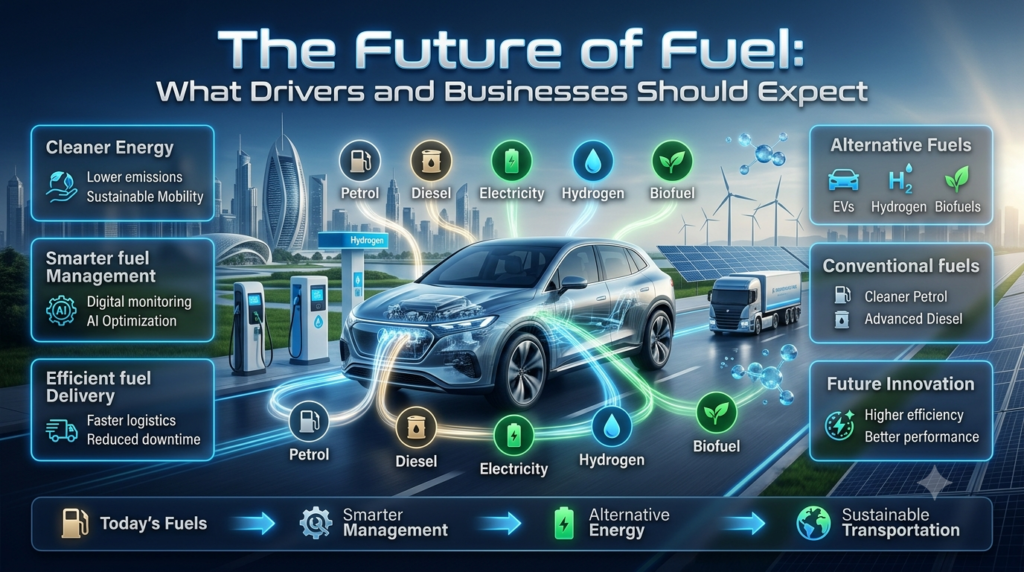
The future of fuel is moving toward cleaner energy, smarter fuel management, and more efficient delivery systems. While petrol and diesel will continue to play an important role for years to come, alternative fuels and advanced fueling technologies are gradually transforming the automotive industry.
The global transportation sector is changing rapidly. Governments, manufacturers, and businesses are investing in technologies that improve fuel efficiency, reduce emissions, and make fuel distribution more sustainable.
However, conventional fuels are still expected to remain essential for millions of vehicles, commercial fleets, construction equipment, and emergency services. Rather than disappearing overnight, traditional fuels will continue evolving through cleaner refining processes, improved additives, and more efficient engines.
Businesses that stay informed about fuel innovations will be better prepared to reduce operating costs while meeting future environmental and operational requirements.
Alternative Fuels Shaping the Future
Modern transportation no longer depends solely on petrol and diesel. Several alternative energy sources are becoming increasingly common across different industries.
Biofuels
Biofuels are produced from renewable organic materials such as vegetable oils, agricultural waste, and animal fats.
Benefits
- Renewable energy source
- Lower dependence on fossil fuels
- Reduced greenhouse gas emissions
- Compatible with some existing engines
Challenges
- Limited availability in some regions
- Production costs
- Feedstock supply limitations
Electric Vehicles (EVs)
Electric vehicles operate using rechargeable battery systems instead of internal combustion engines.
Advantages include:
- Zero tailpipe emissions
- Lower routine maintenance
- Quiet operation
- High energy efficiency
However, charging infrastructure, battery costs, and charging time remain important considerations for many users.
Hydrogen Fuel
Hydrogen fuel is attracting attention as another potential clean-energy solution.
Instead of burning fuel, hydrogen fuel cells generate electricity to power electric motors.
Potential advantages include:
- Fast refueling
- Long driving range
- Water vapor as the primary emission
Although promising, hydrogen infrastructure is still developing in many countries.
Smart Fuel Management Is Becoming the Industry Standard
Technology is transforming how fuel is monitored, delivered, and managed.
Modern businesses increasingly rely on:
- GPS fleet tracking
- Digital fuel monitoring
- Automated fuel reporting
- Inventory management systems
- Predictive maintenance software
These technologies provide valuable insights into fuel consumption and help reduce unnecessary operating costs.
Organizations using professional services like Fuel Delivery Dubai can combine scheduled deliveries with efficient fuel management practices to improve productivity and minimize downtime.
Fuel Myths vs Facts
Many misconceptions about fuel continue to circulate among drivers. Understanding the facts helps you make better decisions.
| Myth | Fact |
|---|---|
| Premium fuel improves every vehicle’s performance. | Premium fuel only benefits engines designed for higher octane ratings. |
| Fuel from every supplier is exactly the same. | Fuel quality and additive packages can vary depending on the supplier. |
| Driving until the tank is almost empty saves money. | Frequently running on very low fuel levels may increase stress on the fuel system. |
| Fuel delivery is only for commercial businesses. | Individual drivers can also benefit from emergency and mobile fuel delivery services. |
| Better driving habits have little impact on fuel economy. | Smooth driving and proper maintenance can significantly improve fuel efficiency. |
Expert Recommendations for Better Fuel Management
Professionals who manage vehicle fleets and fuel systems follow several proven practices that help reduce costs and improve reliability.
Follow Manufacturer Recommendations
Always use the recommended fuel type and octane or cetane rating specified for your vehicle.
Never Ignore Routine Maintenance
A well-maintained engine burns fuel more efficiently and experiences fewer fuel-related problems.
Important maintenance includes:
- Oil changes
- Fuel filter replacement
- Air filter inspection
- Injector cleaning when required
Buy Fuel from Trusted Suppliers
Reliable suppliers maintain better quality control during storage, transportation, and dispensing.
Using trusted providers helps reduce contamination risks and protects sensitive fuel system components.
Monitor Fuel Consumption
Tracking fuel usage helps identify:
- Unusual consumption patterns
- Mechanical issues
- Driver behavior
- Fleet efficiency
Businesses can use this information to improve budgeting and operational planning.
Consider Professional Fuel Delivery
Companies operating multiple vehicles often reduce downtime by scheduling regular deliveries through Fuel Delivery Dubai. On-site fueling keeps vehicles working instead of waiting at fuel stations, improving productivity and simplifying fuel management.
Pro Tip
Fuel management should be viewed as a long-term strategy rather than a day-to-day task. Small improvements in fueling habits, maintenance, and monitoring can lead to significant savings over the life of a vehicle or an entire fleet.
Common Fuel Mistakes to Avoid
Even experienced drivers occasionally make mistakes that reduce fuel efficiency or increase maintenance costs.
Using the Wrong Fuel
Always verify the correct fuel before refueling.
Delaying Vehicle Maintenance
Ignoring maintenance often leads to higher fuel consumption and reduced engine performance.
Waiting Until the Tank Is Empty
Consistently driving with very low fuel levels may place unnecessary strain on the fuel system.
Ignoring Tire Pressure
Underinflated tires increase rolling resistance and fuel consumption.
Choosing Fuel Based Only on Price
Fuel quality should always be considered alongside cost.
What are fuel fundamentals, and why are they important for every vehicle owner?
Fuel fundamentals are the core principles that explain how fuel is produced, stored, delivered, and converted into energy to power a vehicle. They include understanding different fuel types, fuel quality, combustion, fuel efficiency, storage practices, and engine compatibility. While many drivers focus only on filling the fuel tank, knowing these basics helps prevent common fueling mistakes that can affect engine performance and increase maintenance costs. Whether you own a personal car or manage a fleet of commercial vehicles, understanding fuel fundamentals allows you to make informed decisions that improve reliability, efficiency, and long-term vehicle health.
Key Takeaways:
Helps you choose the correct fuel for your vehicle.
Improves fuel efficiency and engine performance.
Reduces the risk of fuel-related mechanical issues.
Supports better maintenance and lower operating costs.
Makes fuel management easier for both individuals and businesses.
How does fuel quality affect engine performance and fuel efficiency?
Fuel quality has a direct impact on how efficiently your engine operates. High-quality fuel burns more cleanly and consistently, allowing the engine to generate power efficiently while reducing harmful deposits inside the fuel system. Poor-quality or contaminated fuel, on the other hand, can cause rough idling, reduced acceleration, injector blockages, and lower fuel economy. Over time, these issues may lead to expensive repairs and reduced engine lifespan. Choosing fuel from trusted suppliers is one of the simplest ways to protect your vehicle and maintain consistent performance.
Key Takeaways:
Clean fuel supports smoother engine operation.
Better combustion improves fuel economy.
High-quality fuel reduces engine deposits.
Protects injectors, fuel pumps, and emission systems.
Helps lower long-term maintenance costs.
What is the difference between petrol and diesel fuel, and which one is better?
Petrol and diesel are designed for different engine technologies, so neither fuel is universally better than the other. Petrol engines use spark ignition and are generally quieter, smoother, and better suited for daily city driving. Diesel engines rely on compression ignition and produce higher torque, making them ideal for long-distance travel, commercial vehicles, and heavy-duty applications. The best choice depends on your driving habits, annual mileage, and the manufacturer’s recommendations rather than fuel price alone.
Key Takeaways:
Petrol is ideal for short trips and daily commuting.
Diesel offers better fuel economy for long-distance driving.
Diesel engines generate higher torque for heavy loads.
Always use the fuel type recommended by the manufacturer.
Choose based on your driving needs, not popularity.
What are the most common fuel-related mistakes drivers make?
Many fuel-related problems are caused by simple mistakes that are easy to avoid. Using the wrong fuel type, ignoring routine maintenance, purchasing fuel from unreliable sources, or regularly driving with an almost empty fuel tank can all reduce engine performance and increase repair costs. Small habits such as maintaining proper tire pressure and servicing the fuel system on schedule can significantly improve vehicle reliability and fuel efficiency over time.
Key Takeaways:
Never use the wrong fuel type.
Avoid running the fuel tank extremely low.
Buy fuel from reputable suppliers.
Follow your vehicle’s maintenance schedule.
Address fuel-related warning signs early.
How can I improve my vehicle’s fuel efficiency without spending a lot of money?
Improving fuel efficiency doesn’t require expensive modifications. Most fuel savings come from better driving habits and regular maintenance. Driving smoothly, avoiding rapid acceleration, maintaining correct tire pressure, replacing clogged air filters, and reducing unnecessary vehicle weight all help your engine use fuel more efficiently. These simple changes can noticeably reduce fuel consumption while improving overall vehicle performance.
Key Takeaways:
Drive smoothly and avoid aggressive acceleration.
Keep tires properly inflated.
Follow regular maintenance schedules.
Remove unnecessary cargo from the vehicle.
Use quality fuel from trusted providers.
Conclusion
Understanding fuel fundamentals is about much more than knowing when to refuel your vehicle. It gives you the knowledge to make smarter decisions about fuel selection, improve fuel efficiency, protect your engine, and reduce long-term maintenance costs. Whether you drive a personal car, manage a commercial fleet, or operate heavy equipment, having a solid understanding of how fuel works helps you maximize performance while minimizing unnecessary expenses.
As automotive technology continues to evolve, fuel management is becoming increasingly important. High-quality fuel, regular vehicle maintenance, proper storage practices, and responsible driving habits all work together to improve reliability and extend the life of your vehicle. For businesses, adopting efficient fuel management strategies can also increase productivity, reduce downtime, and provide better control over operating costs.
If you need a convenient and reliable fueling solution, Fuel Delivery Dubai offers professional on-site fuel delivery services for individuals, businesses, and commercial fleets across Dubai. Whether it’s scheduled fuel supply, emergency refueling, or fleet fueling, choosing a trusted provider ensures your vehicles stay fueled, productive, and ready for the road.
By applying the fuel fundamentals covered in this guide, you’ll not only become a more informed vehicle owner but also make better decisions that improve efficiency, enhance safety, and support long-term vehicle performance. Investing in the right fuel practices today will help you save time, money, and unnecessary repairs in the future.
Leave a Reply